


Sometimes people stop coming.
Not because they didn’t care. Not because recovery didn’t matter.
But because something inside them collapsed — motivation, energy, hope, or simply the ability to keep facing difficult emotions every week.
If you stopped showing up and now feel unsure whether you can return, you’re not alone.
Many people step away from care and later wonder if the door is still open. The good news is that it usually is. And if you’re thinking about reconnecting with a multi-day weekly treatment program, the path back is often far more welcoming than people expect.
What matters most isn’t how the pause happened. What matters is the step you take next.
Step 1: Release the Weight of Shame
The first obstacle for most people isn’t logistics.
It’s shame.
Many people imagine that clinicians are frustrated with them or that returning will involve uncomfortable explanations.
But from a clinical perspective, pauses in treatment are incredibly common.
Recovery is not a straight road. It’s more like a trail through uneven terrain. People take breaks, stumble, step away, and sometimes circle back later.
None of those things mean you’ve failed.
In fact, returning after a difficult period often shows tremendous courage. It means the part of you that wanted change is still alive.
And that part deserves support.
Step 2: Start With a Simple Conversation
You don’t need a perfect explanation for why you left.
You don’t need a long story prepared.
Often the most helpful first step is a simple message or call that sounds like this:
“I stopped attending a while ago, and I’m thinking about coming back.”
That’s enough.
From there, a clinician can help you sort through what happened. Maybe life became overwhelming. Maybe emotions surfaced that felt too intense. Maybe practical issues like scheduling or transportation made attendance difficult.
Whatever the reason, the focus of that conversation isn’t blame.
It’s understanding.
Step 3: Talk Honestly About What Made It Hard
Many people leave treatment because something about it felt overwhelming.
That might include:
- Emotional fatigue from processing difficult experiences
- Feeling exposed or vulnerable during group discussions
- Work or family responsibilities colliding with treatment schedules
- A temporary loss of motivation or belief in recovery
These struggles are incredibly common.
And talking honestly about them allows clinicians to adjust the approach.
Sometimes people need more support early on. Sometimes they need schedule adjustments. Sometimes they simply need reassurance that the difficult parts are normal.
Recovery works best when treatment fits your life — not when you’re forced to push through alone.
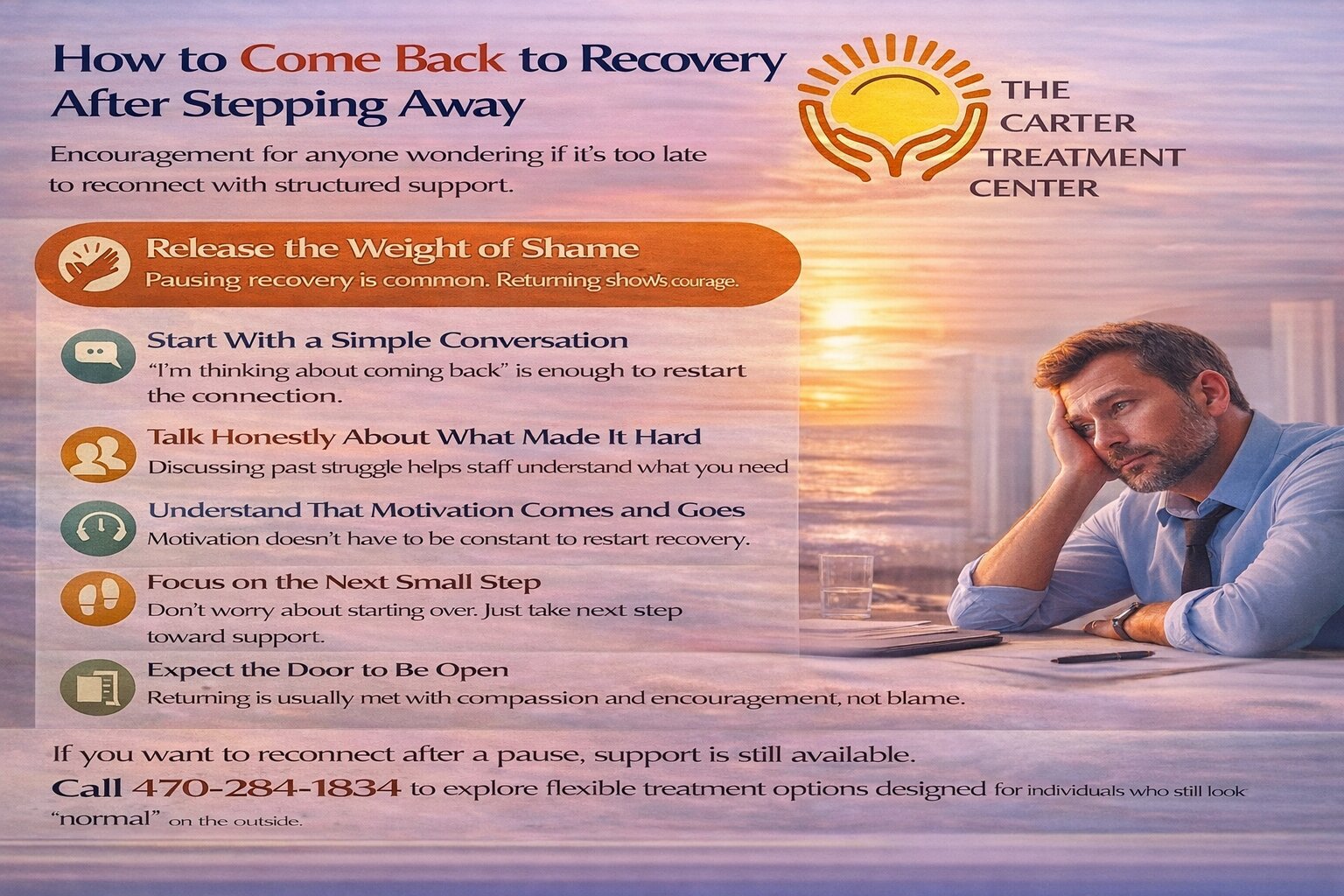
Step 4: Understand That Motivation Comes and Goes
One of the biggest myths about recovery is that motivation has to stay strong the whole time.
In reality, motivation rises and falls for everyone.
There are weeks when people feel hopeful and engaged. And there are weeks when they feel tired, discouraged, or tempted to walk away.
When motivation collapses, many people assume it means they’re not ready for change.
But motivation is not a requirement for returning to care.
Often, motivation returns after people reconnect with support, not before.
Think of recovery less like waiting for the right feeling and more like rebuilding momentum through small actions.
Step 5: Focus on the Next Small Step
When someone thinks about “starting over,” it can feel overwhelming.
So instead of focusing on the entire journey, focus on the next step.
That might mean:
- Sending a message to a treatment center
- Scheduling a conversation with a counselor
- Attending one session just to reconnect
You don’t need to commit to months of treatment today.
You only need to take the next step toward support.
Recovery often begins again in very small ways.
Step 6: Remember Why You Reached Out the First Time
Even if it feels distant now, there was a reason you sought help in the beginning.
Maybe you were exhausted from managing everything alone.
Maybe your relationships felt strained.
Maybe you noticed your habits becoming harder to control.
Those reasons don’t disappear just because motivation faded for a while.
Sometimes they simply get buried under stress, guilt, or discouragement.
Taking a moment to reconnect with that original reason can be powerful.
It reminds you that the desire for change didn’t vanish — it just needs support again.
Step 7: Expect the Door to Be Open
Many people imagine returning to treatment will feel awkward or uncomfortable.
They picture staff questioning them about why they left or expressing disappointment.
In reality, clinicians are usually relieved when someone returns.
Because reaching out again often means something important has shifted: the person is willing to try again.
Instead of judgment, most people are met with something simple and human:
“Welcome back.”
That moment matters more than people expect.
It reminds them that recovery spaces are designed for real life — including the messy, uneven parts.
What Starting Again Can Feel Like
People often fear that returning to treatment means repeating every step from the beginning.
But many find that their previous experience actually helps.
They already know the structure.
They already understand some of the language of recovery.
They may already have relationships with clinicians or peers.
Instead of starting from zero, they’re building on what they’ve already learned.
Recovery rarely moves in a straight line.
But every step — even the difficult ones — contributes to growth.
You Are Not the Only One Who Left and Came Back
This is something many people don’t realize.
Treatment programs see people return all the time.
Sometimes someone steps away for a few weeks.
Sometimes it’s months.
But when they return, the focus isn’t on the gap. It’s on where they are now and what support they need moving forward.
Recovery communities understand that healing takes time.
And sometimes the second attempt is the one that finally sticks.
Frequently Asked Questions
What if I left treatment months ago?
You can still return. Many people pause recovery support for weeks or months before deciding they want to reconnect. Treatment teams are used to helping people re-enter care after time away.
Will staff be disappointed that I stopped attending?
No. Clinicians understand that recovery can be difficult and unpredictable. Their focus is helping you move forward, not judging the past.
Do I have to start treatment completely over?
Not necessarily. Your care team will talk with you about your current situation and determine the best place to resume support based on your needs.
What if I’m not fully motivated yet?
That’s very common. Many people return to treatment while still feeling unsure. Motivation often grows after reconnecting with support and structure.
What if my work or family schedule has changed?
Treatment teams can often help explore options that better fit your current responsibilities and daily routine.
What if I’m embarrassed to reach out?
Feeling embarrassed is incredibly common after stepping away. But clinicians care far more about helping you move forward than about why you left.
What if I’m worried I’ll leave again?
That fear is understandable. But recovery is a learning process. Each attempt helps you understand more about what support you need.
Can returning really make a difference?
Yes. Many people who return to treatment after a pause eventually find the stability and progress they were hoping for. Starting again can be the turning point.
If you’ve stepped away from care and are considering reconnecting, support is still available.
For individuals seeking compassionate help in metro atlanta, recovery programs are designed to meet you exactly where you are — even if the path has been uneven. For individuals seeking ongoing recovery care in Alpharetta, GA or Jefferson, GA, compassionate support is available.
Call 470-284-1834 or visit our multi-day weekly treatment options to learn more about our intensive outpatient program services.