


I didn’t look like someone who needed help.
I had a stable job. I paid my bills. I showed up for birthdays, family dinners, and work meetings. If you asked the people around me, they probably would have said my life looked pretty normal.
But inside, I was running on fumes.
Every day felt like managing two different versions of myself. One version handled responsibilities and kept things together. The other version quietly depended on alcohol just to slow down my thoughts at the end of the day.
For a long time, I told myself it wasn’t serious enough to do anything about it.
But eventually the pressure of holding everything together started to crack.
When I first started looking into a multi-day weekly treatment program, I had one overwhelming question:
How could I possibly do this without blowing up my entire life?
The Problem With Being “High-Functioning”
If you’re someone who still manages your responsibilities, it can be incredibly easy to dismiss the problem.
I told myself things like:
“I still go to work.”
“I’m not hurting anyone.”
“Other people have it much worse.”
And technically, those things were true.
But what I ignored was how much energy it took to keep things looking normal.
I woke up tired almost every day.
I felt anxious by late afternoon.
My patience with people was getting shorter.
Alcohol had slowly shifted from something I enjoyed to something I relied on.
Not to party.
Just to shut my brain off.
Living like that felt like constantly holding a beach ball underwater. It takes effort every second. And eventually your arms give out.
The Moment I Realized I Couldn’t Keep Pretending
There wasn’t a dramatic crisis.
No emergency room. No public meltdown.
Just a quiet realization late one night when the house was silent and I finally admitted something to myself:
This is not sustainable.
I could see where things were heading.
More drinking.
More exhaustion.
More distance from the people I cared about.
That moment didn’t fill me with confidence.
It filled me with fear.
Because getting help sounded like it would destroy the life I had built.
The Fear That Stopped Me for So Long
My biggest fear wasn’t recovery itself.
It was losing my “normal” life.
I imagined having to disappear from work for months.
I imagined awkward conversations with coworkers.
I imagined my family worrying about me.
I pictured treatment as something that required putting your entire life on pause.
But when I started learning about recovery options, I discovered something I hadn’t considered before.
Some programs were designed for people who couldn’t leave their lives behind.
That realization changed everything.
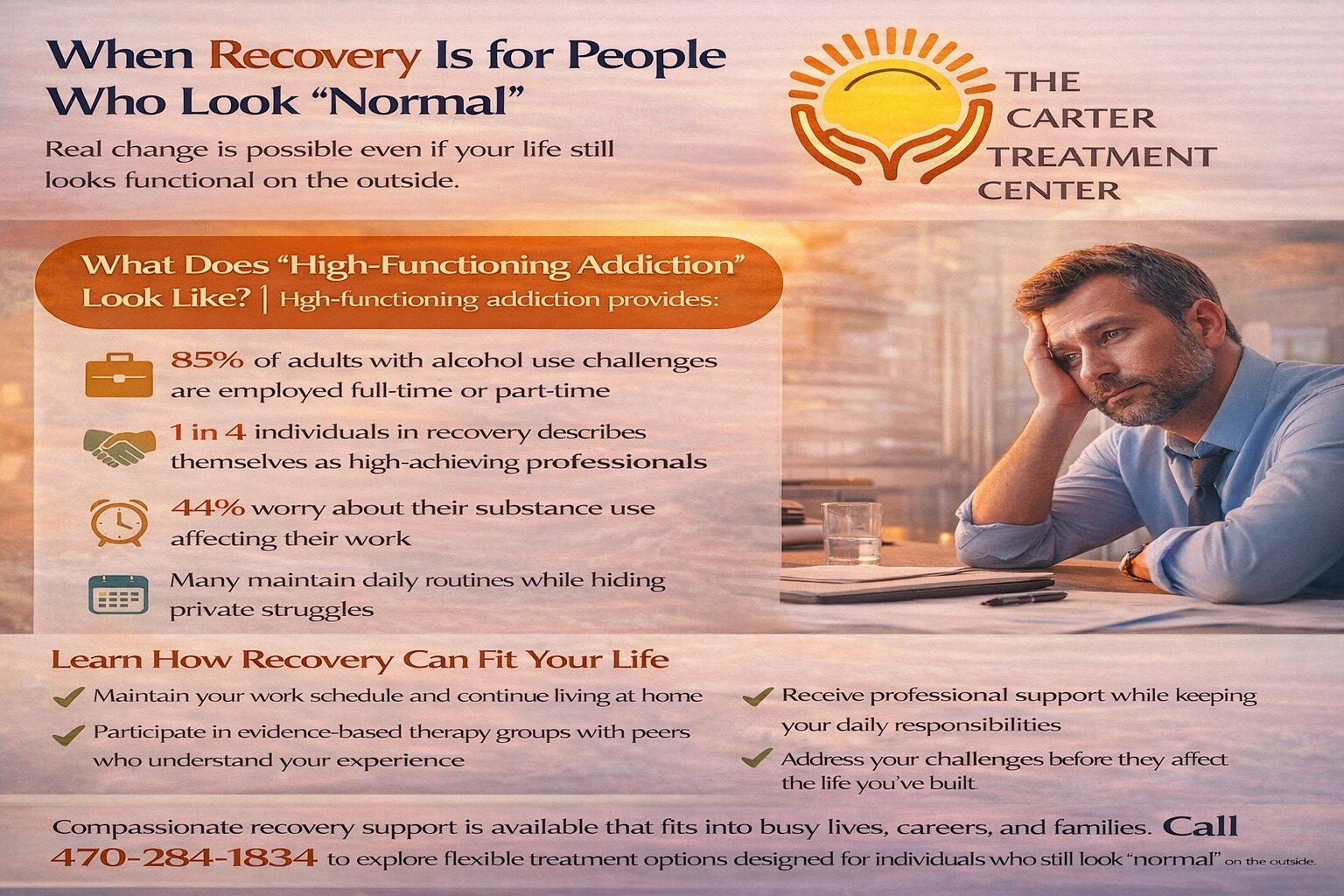
How Recovery Actually Fit Into My Routine
When I started attending a structured recovery program several days each week, I expected it to take over my life.
It didn’t.
My days still looked familiar.
I still woke up early.
I still went to work.
I still came home to the responsibilities waiting for me.
But now my week also included dedicated time where I could focus on getting better.
At first it felt strange.
Almost uncomfortable.
I wasn’t used to slowing down and actually talking about what was happening in my life.
But over time those sessions became something I relied on.
They became a place where I didn’t have to pretend everything was fine.
The First Time I Realized I Wasn’t Alone
One of the biggest surprises was the people I met.
Before starting recovery support, I assumed I would be surrounded by people whose lives looked nothing like mine.
That assumption disappeared almost immediately.
There were professionals.
Parents.
People who looked like they could have been sitting next to me at a work meeting.
Everyone had their own story, but many of us shared the same secret struggle:
We were functioning on the outside while falling apart inside.
Hearing those stories felt like someone turning on a light in a dark room.
For the first time, I didn’t feel like the only person living that double life.
The Relief of Finally Being Honest
High-functioning addiction comes with a lot of pressure.
You become very good at managing appearances.
You show the competent version of yourself to everyone else while hiding the stress, the exhaustion, and the quiet dependency.
Recovery spaces remove that pressure.
You don’t have to perform there.
You can say things out loud that you’ve never admitted before:
“I’m overwhelmed.”
“I don’t know how to stop.”
“I’m scared people will figure this out.”
And instead of judgment, you hear something powerful:
“Yeah. I’ve felt that too.”
That kind of understanding changes people.
It creates space for honesty, and honesty creates room for change.
The Changes Happened Slowly
Recovery didn’t transform my life overnight.
But small shifts started happening.
I slept better.
My thinking became clearer.
I felt less reactive during stressful moments.
Things that once felt overwhelming became manageable again.
One of the most noticeable changes was how present I felt with the people around me.
I started actually listening in conversations.
I noticed small moments with family that I used to rush through.
For years, alcohol had been my way of escaping stress.
Recovery gave me a way to actually face it.
What I Wish Someone Had Told Me Earlier
If you’re someone who is still managing work, family, and responsibilities while quietly struggling, you might be telling yourself the same things I did.
“That’s not for people like me.”
“I should be able to handle this on my own.”
“Things aren’t bad enough yet.”
But waiting for things to become worse isn’t the only path.
Many people begin recovery long before their lives fall apart.
They do it because they recognize the direction things are heading and decide to change course early.
Looking back, I wish I had understood that sooner.
Getting help didn’t take away the life I had built.
It helped me keep it.
Frequently Asked Questions
Can someone really balance recovery support with a full-time job?
Yes. Many people who attend structured treatment programs continue working full-time. Sessions are often scheduled around normal work hours so people can maintain their careers while receiving support.
What if my family doesn’t know I’m struggling?
You are in control of who you involve in your recovery process. Some people choose to share their experience with loved ones, while others take time before having those conversations.
Is it possible to recover without leaving home?
Yes. Many recovery options allow individuals to live at home and maintain their daily routines while attending scheduled treatment sessions each week.
What if I’m not sure I have a serious problem?
That uncertainty is very common. Many people seek help not because their life has fallen apart, but because they recognize patterns that feel unsustainable.
How long does structured outpatient care usually last?
The length of care varies depending on the person and their needs. Some individuals participate for several weeks, while others continue longer to strengthen their recovery foundation.
Will people judge me for needing help?
Most people who enter recovery programs discover the opposite. The environment is typically built on understanding and shared experiences rather than judgment.
What happens during group sessions?
Group discussions give people the chance to share experiences, learn coping strategies, and hear from others navigating similar challenges.
Can recovery really fit into a “normal” life?
Yes. Many people discover that recovery doesn’t interrupt their lives — it improves them by creating healthier routines, clearer thinking, and stronger relationships.
If you’re someone who still shows up for work, family, and responsibilities but privately feels exhausted by the struggle, you’re not alone.
Many people balancing busy lives have found real change through recovery programs designed to fit around daily responsibilities.
For individuals seeking compassionate help in metro atlanta, there are recovery options that allow you to begin healing without stepping away from everything that matters to you. If you’re navigating the quieter phase of recovery and want guidance, our team is here to help individuals and families in Alpharetta, GA and Jefferson, GA.
Call 470-284-1834 or visit our multi-day weekly treatment options to learn more about our intensive outpatient program services.