


Starting recovery can feel like a moment of clarity.
You decide something needs to change. You take the step to get help. For a while, that decision can carry you forward.
But somewhere in the middle, things often shift.
The emotions get heavier. Life outside treatment keeps moving. Motivation that once felt strong starts to flicker.
Many people reach that moment and quietly wonder if they can keep going.
If you’re participating in a multi-day weekly treatment program and it suddenly feels harder than expected, that doesn’t mean something is wrong.
It often means you’ve reached the part of recovery where real change begins.
Step 1: Understand That the Middle Is Often the Hardest Part
The beginning of recovery often comes with urgency.
People are motivated. They feel relief just knowing they’re not facing things alone anymore.
But once that initial momentum fades, recovery begins asking deeper questions.
Old patterns surface.
Emotions that were once numbed begin to reappear.
Life responsibilities still demand attention.
This is the phase when many people think something is going wrong.
In reality, this stage is extremely common.
Recovery is less like a sprint and more like a long walk. The first mile feels energized. The middle miles test your endurance.
Step 2: Say the Hard Things Out Loud
When recovery becomes difficult, people often start withdrawing.
They share less in group.
They avoid difficult conversations.
They begin considering whether they should stop attending altogether.
But recovery works best when the hard moments are spoken aloud.
Telling a counselor, “I’m struggling to stay motivated,” can open the door to meaningful support.
Telling a group, “I’m thinking about quitting,” often reveals that other people have felt the exact same way.
Sometimes the most powerful moment in recovery is realizing that the struggle you thought was unique is actually shared by many people around you.
Step 3: Shrink the Timeline
When treatment feels overwhelming, it’s easy to think about the entire journey ahead.
Weeks or months of recovery work can start to feel intimidating.
A helpful shift is to shrink your focus.
Instead of thinking about finishing the whole program, focus on the next step.
Attend the next session.
Have the next conversation.
Make it through the next day.
Recovery is built through small steps repeated consistently.
You don’t need to have everything figured out today.
Step 4: Recognize That Doubt Is Part of the Process
Many people in recovery experience moments of doubt.
They wonder if treatment is working.
They question whether they truly belong in recovery.
They think about returning to familiar habits.
These thoughts can feel discouraging.
But they are also common.
Change challenges the routines and coping mechanisms people have relied on for years. That disruption can create uncertainty.
Doubt doesn’t mean recovery is failing.
Often, it means someone is moving through an important phase of growth.
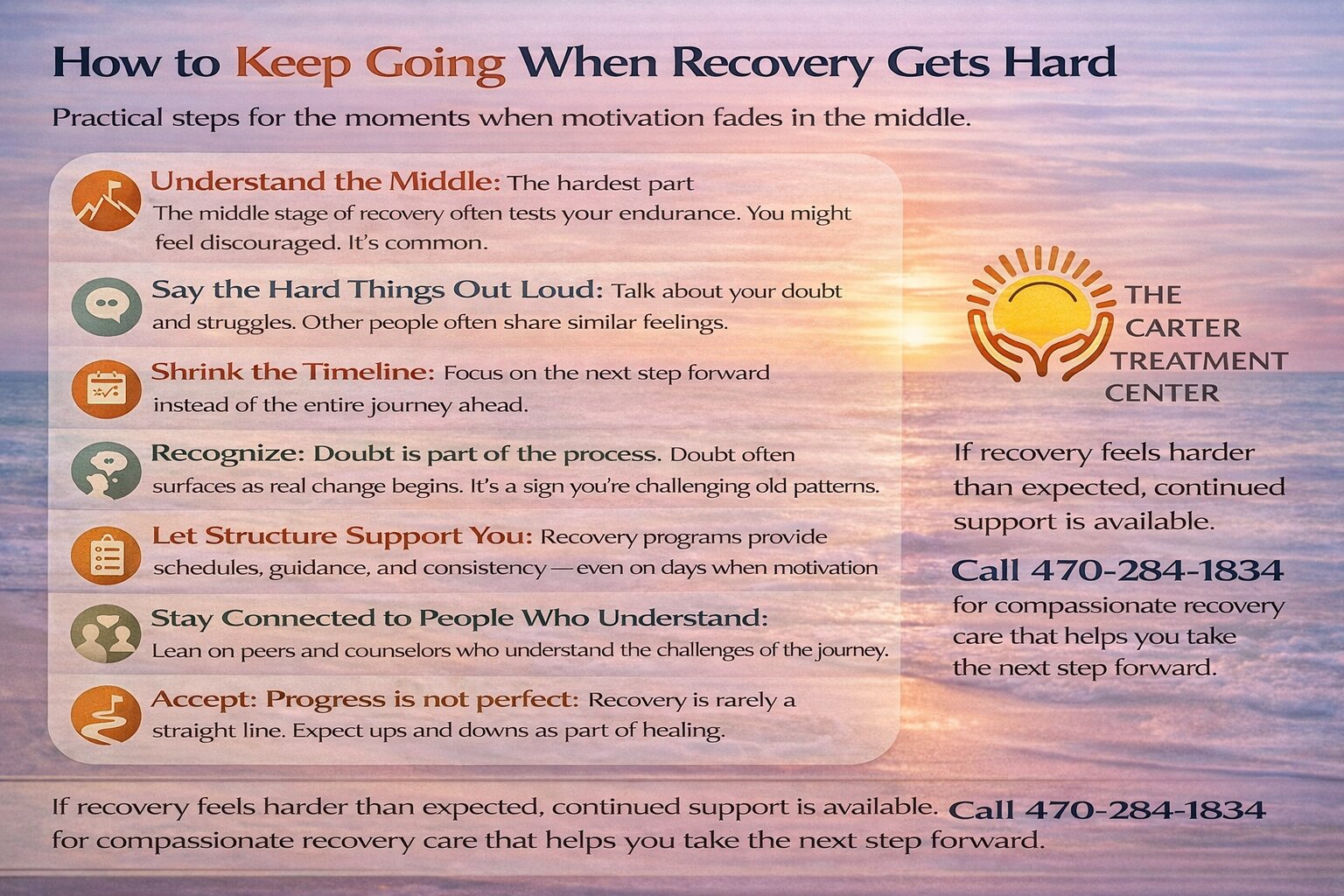
Step 5: Let Structure Support You
Motivation can be unpredictable.
Some days you may feel determined and hopeful.
Other days simply getting through the day feels like enough.
Structured recovery programs exist partly to help during those moments.
Schedules provide consistency.
Counselors provide guidance.
Peers provide encouragement.
Even when motivation feels low, showing up allows the structure around you to carry some of the weight.
Think of recovery like hiking through fog.
You may not see the entire path ahead, but continuing to walk still moves you forward.
Step 6: Stay Connected to People Who Understand
Recovery can feel isolating when people try to carry it alone.
But one of the most powerful parts of structured treatment is community.
The people sitting beside you in sessions often understand the struggles that others outside the program might not.
They know the frustration of wanting to change while also feeling afraid.
They know what it’s like when motivation disappears for a while.
These shared experiences create connection.
And connection often becomes the thing that helps people stay when leaving would be easier.
Step 7: Accept That Progress Is Not Perfect
Many people believe recovery should look like steady improvement.
In reality, progress is rarely that smooth.
Some weeks feel productive.
Some weeks feel frustrating.
Some days feel hopeful, while others feel uncertain.
All of those experiences can exist within the same recovery journey.
The goal is not perfection.
The goal is continuing to show up — even when the path forward feels unclear.
The Quiet Strength of Staying
One thing people often say after completing recovery support is this:
The hardest weeks were the ones that mattered most.
Those were the weeks when quitting seemed easier.
Those were the weeks when doubt was loudest.
But staying through those moments often allowed something new to develop — resilience, honesty, and trust in the process.
Recovery is rarely about dramatic breakthroughs.
More often, it’s about the quiet decision to return tomorrow.
Frequently Asked Questions
Is it normal for recovery to feel harder after the first few weeks?
Yes. Many people experience a shift after the early stages of treatment. As deeper emotional work begins, recovery can feel more challenging for a period of time.
What should I do if I feel like skipping sessions?
If attending sessions starts to feel difficult, it can help to talk with a counselor or group about what you’re experiencing. Often these feelings are connected to stress or emotional fatigue that can be addressed with support.
Does struggling during treatment mean the program isn’t working?
Not necessarily. In many cases, emotional discomfort means important issues are being addressed for the first time.
What if my motivation completely disappears?
Motivation naturally rises and falls during recovery. Continuing to attend sessions and staying connected with peers can help rebuild momentum.
What if life outside treatment becomes overwhelming?
Balancing recovery with work, family, and responsibilities can be challenging. Treatment teams often help people develop strategies for managing these pressures while continuing care.
What if I’ve already missed a few sessions?
Missing sessions does not mean you have to stop treatment entirely. Many people return after brief gaps and continue progressing in recovery.
How long do people usually stay in structured outpatient care?
The length of care varies depending on each person’s needs and progress. Some individuals participate for several weeks, while others continue longer to strengthen their recovery foundation.
What if I’m not sure I can finish the program?
It’s common to feel uncertain about the full journey ahead. Many people find it helpful to focus on the next step rather than the entire timeline.
If recovery feels harder now than it did when you started, that doesn’t mean you’re failing.
In many cases, it means you’re moving through the part of healing where real change begins.
For individuals exploring treatment options in metro atlanta, compassionate recovery support is available to help you keep moving forward, even when the path feels difficult. Continued recovery support is available for those seeking care in Alpharetta, GA and Jefferson, GA.
Call 470-284-1834 or visit our multi-day weekly treatment options to learn more about our intensive outpatient program services.