


Sometimes the hardest moment isn’t admitting something is wrong.
It’s the moment when you quietly realize you probably can’t keep living the way you are… and the idea of treatment suddenly becomes real.
For many people struggling with depression and addiction, this stage is full of mixed emotions. There’s relief that something might help, but also fear of the unknown. What will treatment actually feel like? Will people judge you? Will it work?
Some individuals begin exploring options like structured daytime care, hoping for support while still maintaining pieces of their daily life. What they often discover along the way, though, are a few truths that nobody really explains beforehand.
And those truths can make the entire experience feel far less intimidating.
The First Step Is Often the Quietest One
Movies and TV shows make seeking treatment look dramatic.
Someone hits rock bottom. A big emotional speech happens. A life-changing decision follows.
Real life usually looks very different.
The first step often happens quietly.
It might look like sitting in your car after work wondering why you feel so exhausted all the time. It might look like searching late at night for answers to questions you’re afraid to say out loud. It might simply be admitting to yourself that things aren’t getting better.
Many people start researching treatment options long before they tell anyone else.
And that moment of quiet honesty is often the true beginning of recovery.
The Fear of Judgment Is Usually Bigger Than the Reality
One of the biggest worries people carry into treatment is the fear of being judged.
People imagine walking into a room where everyone immediately knows their worst moments. They imagine being labeled, analyzed, or looked down on.
In reality, most treatment environments are filled with people who understand exactly how complicated depression and addiction can feel.
People who know what it’s like to struggle silently.
People who know how hard it can be to ask for help.
Instead of judgment, what many people find is something unexpected: understanding.
It’s often the first place where people feel safe enough to stop pretending.
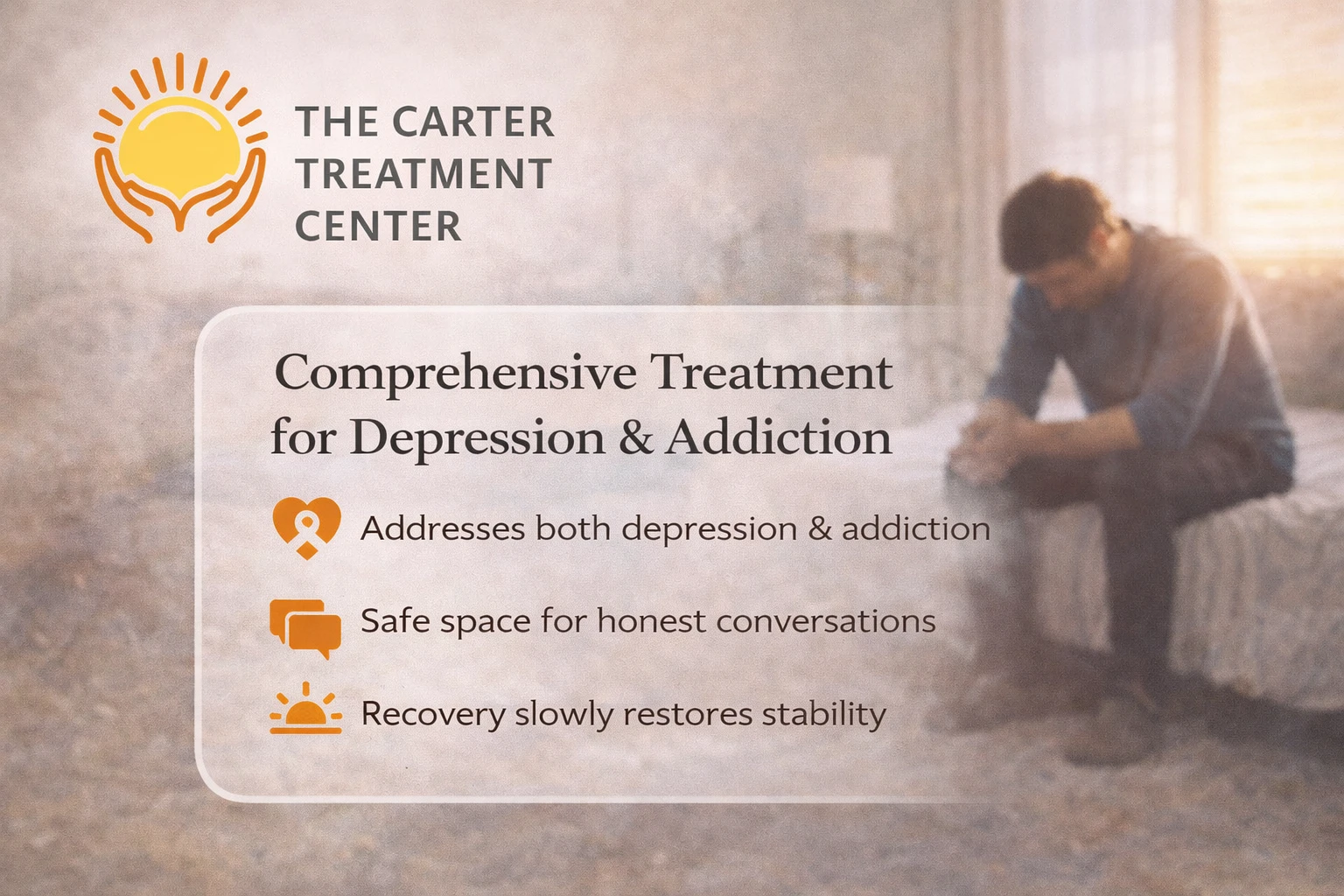
Depression and Addiction Often Speak the Same Language
A lot of people enter treatment believing they have one main problem.
Maybe the depression feels overwhelming, and substances became a way to escape it.
Or maybe substance use slowly grew over time, and the emotional fallout created deep sadness and isolation.
What becomes clear in treatment is how closely these struggles are connected.
Depression can create emotional numbness that makes substances feel like relief. Substances can temporarily lift the fog, only to deepen the depression later.
It becomes a cycle.
When treatment addresses both at the same time, people often start noticing small but meaningful changes. Energy slowly returns. Thoughts become clearer. Emotional stability begins to rebuild.
It doesn’t happen overnight, but it does happen.
You Don’t Have to Be “Strong Enough” Before You Start
Many people delay treatment because they believe they need to be stronger first.
They tell themselves things like:
“I should be able to handle this on my own.”
“Other people have it worse than I do.”
“Maybe I just need more willpower.”
But healing rarely begins with strength.
It usually begins with honesty.
Treatment isn’t a test you have to pass before entering. It’s a place designed to help people rebuild the strength that depression and addiction have slowly worn down.
Showing up uncertain, scared, or even skeptical is completely normal.
The only requirement is a willingness to take the next step.
Connection Is Often the Most Powerful Part of Healing
Depression and addiction both have something in common: isolation.
Even when people are surrounded by family or friends, they can feel deeply alone.
Many individuals learn how to hide what they’re going through. They become experts at functioning while silently struggling.
Treatment changes that dynamic.
Instead of carrying everything alone, people begin talking with others who recognize the same patterns and emotions.
Sometimes it’s the first time someone hears another person describe exactly what they’ve been feeling.
That moment of recognition can be powerful.
It reminds people that they’re not broken or alone — they’re human, and they’re struggling with something that many others have faced too.
Progress Rarely Looks Dramatic
Another thing people often misunderstand about recovery is what progress actually looks like.
People expect dramatic breakthroughs.
But real healing tends to show up in smaller, quieter ways.
It might look like:
- Sleeping through the night again
- Feeling motivated to go outside for a walk
- Laughing without forcing it
- Having a conversation without feeling overwhelmed
These moments might seem small from the outside.
But for someone who has been stuck in depression or addiction, they can feel enormous.
Recovery is less like flipping a switch and more like watching daylight slowly return after a long night.
Treatment Is Not About Punishment — It’s About Rebuilding
Many people approach treatment with a subtle sense of shame.
They feel like they’ve failed somehow.
But treatment isn’t about punishment or fixing something “wrong” with you.
It’s about rebuilding the parts of life that depression and addiction slowly eroded.
That might include emotional skills, coping strategies, communication, or simply learning how to experience life again without substances.
For some people, treatment becomes the first place where they begin rediscovering who they were before everything became so heavy.
That rediscovery can be powerful.
And it often becomes the foundation for long-term healing.
Healing Looks Different for Everyone
There is no single path that works for every person.
Some people need a complete reset away from their environment. Others benefit from structured support while continuing to live at home and maintain parts of their routine.
Programs like a partial hospitalization program can provide a high level of care during the day while still allowing individuals to return home afterward. For many people, this balance helps them focus on recovery without feeling completely disconnected from their lives.
The right level of care depends on many factors, including mental health needs, substance use history, and personal circumstances.
What matters most is finding a program that meets you where you are.
A Note for People Searching for Help Nearby
Many people begin their search for treatment close to home, hoping to find support within a familiar community.
Some individuals exploring treatment options come from Alpharetta, Georgia, while others travel from nearby communities such as Jefferson, Georgia to access specialized care and support.
Being close to home can make treatment feel more manageable, especially when family involvement and ongoing support are part of the healing process.
Recovery Often Begins With One Honest Conversation
People sometimes imagine that choosing treatment requires complete certainty.
But most people don’t feel certain when they first reach out.
They feel tired.
They feel overwhelmed.
They feel unsure if anything will truly help.
And yet, many people who eventually recover started in exactly that place.
Recovery often begins with something much smaller than confidence.
It begins with curiosity.
“What if I talked to someone?”
“What if there’s another way to live?”
Those questions can be the first real steps toward change.
Frequently Asked Questions
How do I know if I need professional help for depression and addiction?
If depression or substance use is affecting your daily life, relationships, or sense of stability, it may be time to consider professional support. Many people seek treatment when they feel stuck, overwhelmed, or unable to improve things on their own.
What if I’m scared that treatment won’t work?
This fear is extremely common. Many people entering treatment worry that they’re beyond help or that nothing will change. Recovery is rarely instant, but with the right support and consistency, many individuals begin experiencing meaningful improvements in mental health and overall well-being.
Can I still live at home while getting treatment?
Yes, some programs allow people to receive structured care during the day while returning home afterward. This type of approach can help individuals stay connected to family and daily responsibilities while still receiving intensive therapeutic support.
What happens during a typical treatment day?
A typical day often includes therapy sessions, group discussions, skill-building activities, and time to reflect on personal progress. The goal is to help individuals understand their experiences, develop coping strategies, and build healthier patterns for the future.
How long does recovery usually take?
Recovery is different for every person. Some people notice improvements within weeks, while others require longer periods of support and continued therapy. What matters most is building sustainable progress rather than rushing the process.
Call 470-284-1834 to learn more about our partial hospitalization program in Metro Atlanta.