


Sometimes the shift doesn’t come from a crisis.
It comes from a quiet realization.
Maybe you’ve started noticing how alcohol or substances affect your mood the next day. Maybe you’ve tried taking breaks and realized how difficult it feels. Maybe part of you simply wonders what life would look like without the constant cycle.
For many people, being sober curious starts as a thought experiment. But over time, that curiosity can grow into something deeper — a desire for stability, clarity, and support.
Some individuals begin exploring options like structured daytime care because they want guidance without stepping completely away from their lives. What they discover is that the journey from curiosity to meaningful support doesn’t happen all at once.
It unfolds through small, intentional steps.
Step One: Listen to the Questions You’ve Been Avoiding
Sober curiosity often begins with questions that are easy to ignore at first.
Why do I feel so drained after drinking?
Why does stopping feel harder than I expected?
Why does my mood crash the day after using?
These questions don’t mean you’ve labeled yourself or made a final decision.
They simply mean your mind is starting to notice patterns.
Many people try to silence those questions by promising themselves things like:
- “I’ll cut back next week.”
- “I’ll only drink socially.”
- “I just need more discipline.”
But curiosity tends to return.
And when it does, it’s often pointing toward something important: the desire for change.
Listening to that curiosity instead of dismissing it can be the first real step toward a healthier relationship with yourself.
Step Two: Notice When Moderation Starts Feeling Exhausting
Many sober curious individuals attempt moderation before considering support.
They create rules.
Only two drinks.
Only on weekends.
Only with friends.
At first, these rules may work.
But over time, many people notice that constantly negotiating with themselves becomes mentally exhausting. Instead of feeling free, they feel like they’re constantly managing something.
That feeling of exhaustion is more common than people realize.
It’s not about weakness.
It’s about the fact that substances often become tied to deeper emotional patterns — stress, loneliness, anxiety, or depression.
When that happens, moderation alone can feel like trying to patch a deeper issue with temporary solutions.
And that realization can lead people to explore structured help.
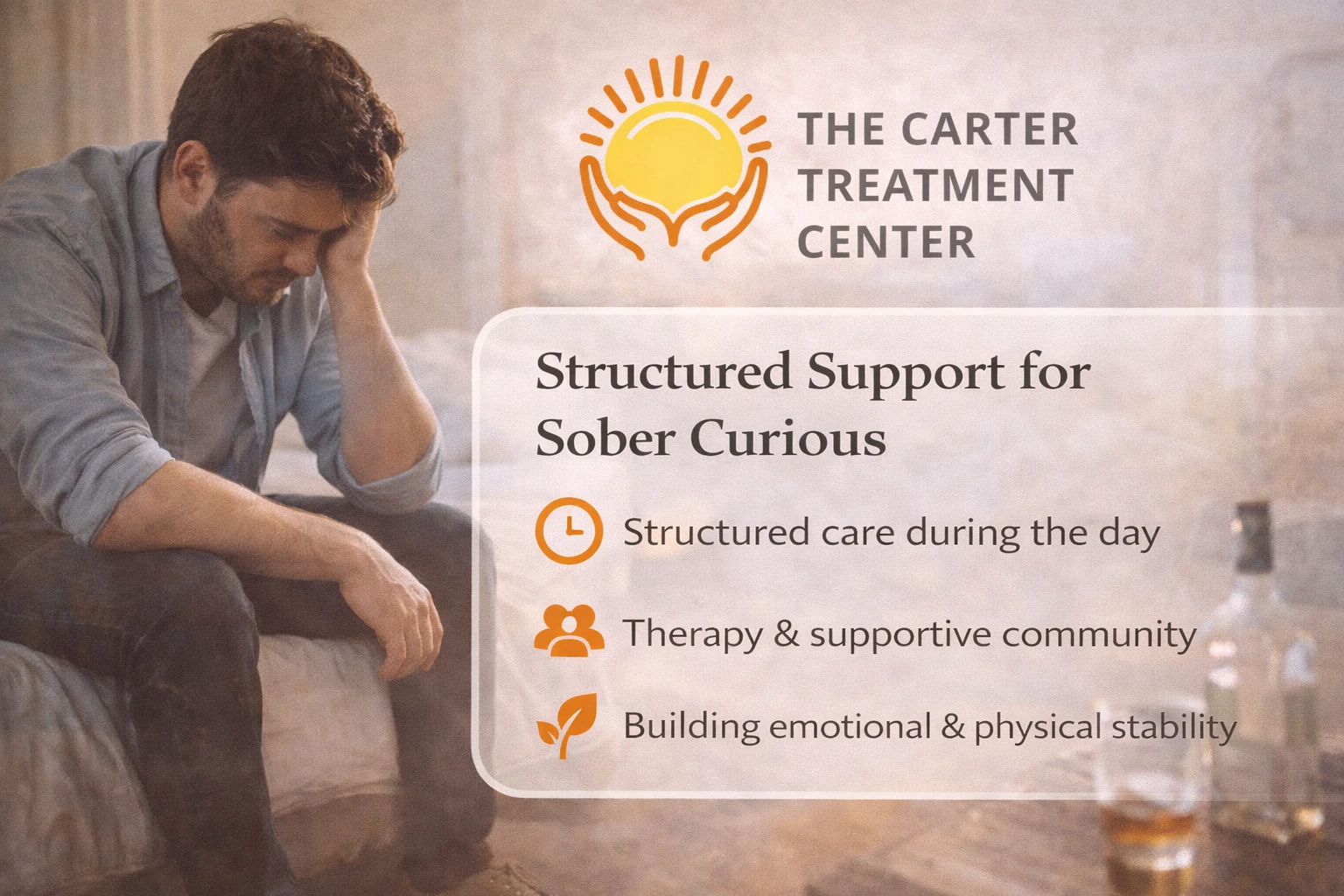
Step Three: Recognize That Support Doesn’t Mean Disappearing From Life
One of the biggest fears people have when considering treatment is losing control of their routine.
They imagine having to leave work, family responsibilities, or daily life behind.
But not all recovery paths require stepping completely away from life.
Many people benefit from structured daytime care that allows them to receive intensive support during the day while still returning home afterward.
This approach gives individuals the chance to focus deeply on recovery while remaining connected to their environment.
For people who are sober curious but ready for more than self-guided change, this balance can feel empowering rather than overwhelming.
Step Four: Talk With People Who Actually Understand the Experience
One of the hardest parts of exploring sobriety is feeling misunderstood.
Friends may say things like:
“Just drink less.”
“Everyone has rough weeks.”
“You’re overthinking it.”
Even when people mean well, these responses can make someone feel more isolated.
Structured support environments create a different kind of space.
Instead of minimizing the struggle, people listen.
Conversations become honest.
People share the same frustrations, the same doubts, and the same moments of clarity.
Many individuals say this is the moment something shifts for them.
For the first time, they realize they’re not the only one navigating these questions.
Step Five: Allow Yourself to Want Something Better
One of the biggest emotional barriers to seeking help is the belief that things aren’t “bad enough.”
People often think treatment should only be for extreme situations.
But many individuals who enter structured care didn’t arrive at rock bottom.
They arrived because they wanted something different.
They wanted clarity.
They wanted emotional stability.
They wanted their lives to feel manageable again.
For some people, that path eventually leads them to a partial hospitalization program, where they receive consistent therapeutic support while rebuilding healthier routines.
The goal isn’t punishment or labels.
It’s creating an environment where healing becomes possible.
Step Six: Expect Growth to Feel Uncomfortable at First
Changing your relationship with substances isn’t just about stopping something.
It’s about learning new ways to handle emotions.
Stress, boredom, loneliness, celebration — these are moments when many people instinctively reach for substances.
When those habits shift, new emotional experiences can feel unfamiliar.
Early recovery often includes moments of discomfort.
But those moments are also where growth happens.
It’s similar to strengthening a muscle that hasn’t been used in a long time. At first it feels awkward and tiring.
But gradually, that muscle becomes stronger.
And the skills learned during recovery begin to feel natural.
Step Seven: Watch What Happens When People Commit to the Process
Many individuals who begin structured support once described themselves exactly the same way.
“I was just curious about sobriety.”
“I didn’t think I needed treatment.”
“I just wanted to feel better.”
Over time, many of those same individuals report surprising changes.
They sleep better.
Their thoughts feel clearer.
Relationships become less tense.
The emotional rollercoaster that once defined daily life begins to stabilize.
One client once described the experience like this:
“I thought sobriety would shrink my life. Instead, it gave it back.”
Moments like that are why many people choose to continue the recovery process even when it feels challenging.
A Note for People Looking for Care Close to Home
Finding support close to home can make the idea of treatment feel far more approachable.
Many people exploring structured care come from nearby communities such as Alpharetta, Georgia, where individuals are searching for compassionate programs that understand both mental health and substance use challenges and for specialized care that can support long-term recovery.
Being within reach of familiar surroundings often helps people stay connected to family, friends, and community support while they focus on healing.
Recovery Often Begins With a Single Honest Conversation
Many people imagine that deciding to seek help requires a dramatic turning point.
But in reality, recovery often begins with a much smaller step.
A conversation.
A phone call.
A moment of honesty where someone says, “I think I need support.”
From there, the path becomes clearer.
Guidance replaces confusion.
Structure replaces chaos.
Support replaces isolation.
And slowly, the curiosity that started the process begins turning into confidence.
Frequently Asked Questions
What does it mean to be sober curious?
Being sober curious usually means someone is exploring what life might look like with less or no alcohol or substances. It doesn’t necessarily mean they’ve committed to permanent sobriety. Instead, they’re questioning habits and considering healthier alternatives.
How do I know if I need structured support?
If attempts to cut back or quit on your own feel overwhelming, or if substances are affecting your mood, relationships, or daily functioning, structured support may help provide stability and guidance during the change process.
Can someone seek treatment even if they’re not sure they’re “addicted”?
Yes. Many people enter treatment not because they’ve labeled themselves as addicted, but because they recognize unhealthy patterns or emotional struggles connected to substance use.
Will treatment take me away from my responsibilities?
Some programs allow individuals to receive intensive care during the day while returning home afterward. This structure can help people maintain connections with family and daily responsibilities while focusing on recovery.
Is it normal to feel scared about seeking help?
Absolutely. Fear, uncertainty, and hesitation are very common. Many people who eventually benefit from treatment initially felt unsure about whether it would work or whether they were ready.
What kind of changes do people usually notice during recovery?
People often report improvements in emotional stability, sleep, relationships, and mental clarity. These changes may happen gradually but can have a powerful impact on overall well-being.
Call 470-284-1834 to learn more about our partial hospitalization program in Metro Atlanta.