


Sometimes the moment hits quietly.
You notice a change in your child’s voice. Their energy feels different. Conversations become shorter. The medication that once seemed to help suddenly doesn’t seem to be doing much at all.
And somewhere in the middle of all that confusion, a new question appears:
How do treatment and medications actually work together when someone is struggling with addiction again?
Many parents begin exploring options like structured daytime care because they want more than guesswork. They want a place where professionals can observe, stabilize, and carefully guide both mental health care and recovery.
What many families discover along the way is that medication interactions and substance use create a far more complicated picture than anyone initially explains.
Understanding that complexity can make the path forward feel less frightening.
Why Medications Sometimes Stop Working the Way They Used To
One of the most confusing moments for parents happens when medications that once helped suddenly seem ineffective.
Maybe your child was taking medication for anxiety, depression, ADHD, or mood regulation. For a while, things seemed stable. Then something shifted.
Mood swings return. Motivation disappears. Irritability increases.
Parents often wonder if the medication stopped working or if the dosage is wrong.
But in many cases, substances change how medications behave in the body.
Alcohol, stimulants, opioids, and other substances can interfere with the brain’s chemistry. They may weaken the intended effect of medications or create unexpected side effects.
This doesn’t necessarily mean the medication is the wrong one.
It often means the brain is being pulled in two directions at once.
The Overlap Between Mental Health and Substance Use
Parents sometimes try to separate mental health challenges from substance use.
But the two are often deeply connected.
A young adult struggling with anxiety or depression may use substances to numb emotional pain. Over time, that coping strategy can create new problems — worsening depression, increasing impulsivity, and making emotional regulation harder.
When both struggles exist at the same time, medications alone may not solve the problem.
Treatment environments that address both the emotional and behavioral aspects of recovery often create the stability needed for medications to work properly again.
Without that stability, the brain remains under constant pressure.
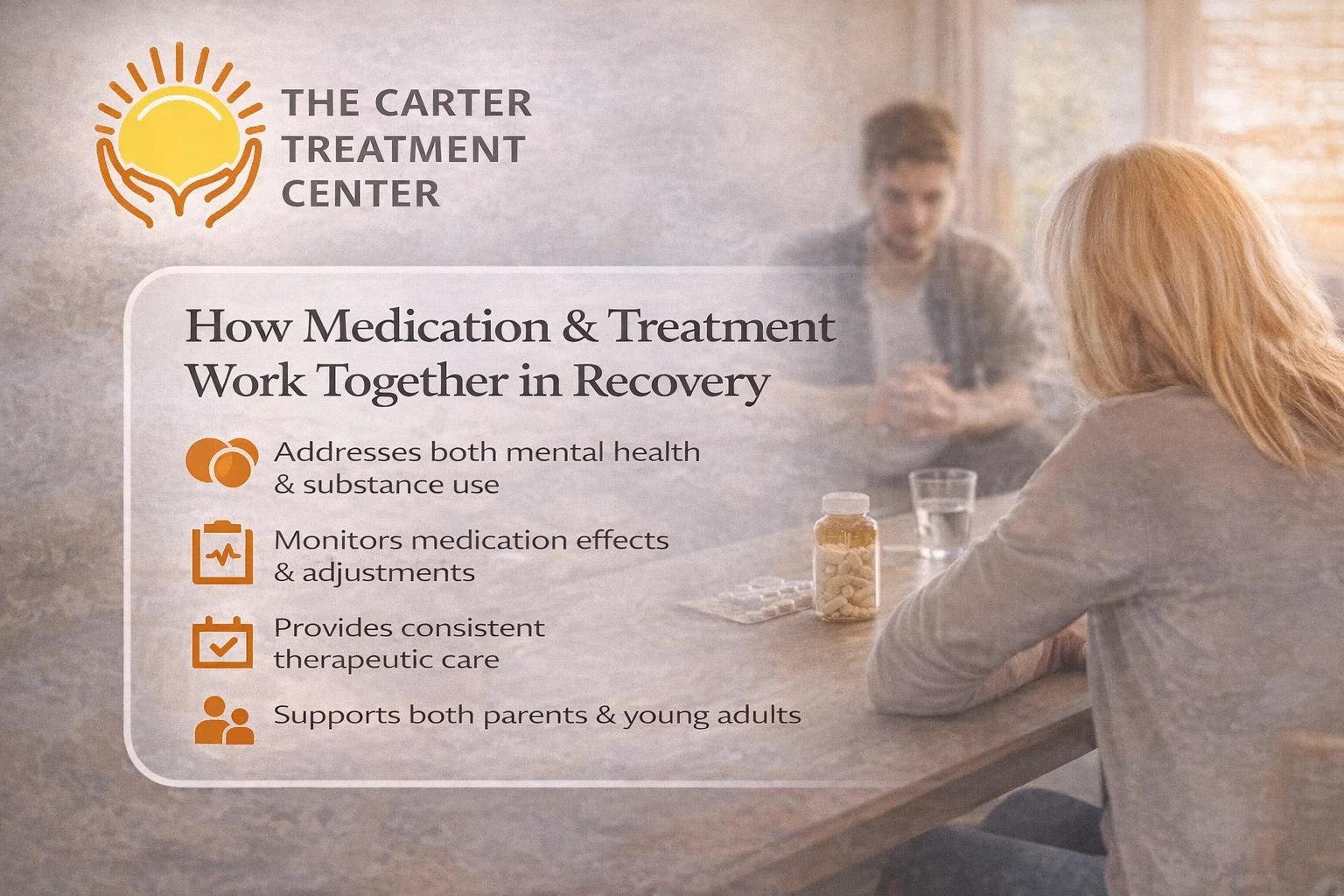
Why Observation Matters More Than Quick Medication Changes
Many families feel anxious when they hear that medication adjustments might happen during treatment.
But careful observation is one of the most important tools clinicians have.
In everyday life, doctors often see patients for brief appointments. That limited window makes it difficult to fully understand how medications interact with stress, sleep patterns, substance use, and emotional triggers.
Structured care provides something very different.
Clinicians observe how someone feels in the morning, how their mood changes throughout the day, and how they respond to therapy and support. This deeper understanding allows them to make thoughtful decisions instead of rushed ones.
Over time, those careful adjustments can help medications begin working the way they were intended.
The Role Structure Plays in Stabilizing the Brain
The brain heals best when life becomes predictable.
During periods of substance use or emotional distress, daily routines often disappear. Sleep becomes irregular. Stress levels rise. Meals are skipped or inconsistent.
These disruptions make it difficult for medications to stabilize brain chemistry.
Structured care reintroduces rhythm into daily life.
Regular therapy sessions.
Consistent sleep patterns.
Scheduled activities that support emotional growth.
This stability creates the conditions where both therapy and medication can begin working together.
Without structure, even the best medications may struggle to help.
The Emotional Reality Parents Carry
Behind every clinical decision is something deeply human: a parent who cares.
Parents often carry questions that keep them awake at night.
Did I miss the signs?
Did I do something wrong?
Why does it feel like we’re starting over again?
These questions come from love, not failure.
Recovery from substance use rarely follows a straight line. Many young adults experience periods of progress followed by setbacks before long-term stability develops.
Treatment isn’t about judging the past.
It’s about creating a path forward that allows healing to begin again.
What Parents Often Notice First When Healing Begins
Families sometimes expect recovery to look dramatic.
But the first signs of progress are usually quiet.
A deeper night of sleep.
More consistent moods.
A willingness to talk again.
Small moments begin to appear where tension once filled every conversation.
Over time, those moments grow.
Clarity returns. Emotional stability improves. The young adult begins reconnecting with parts of themselves that addiction and depression had slowly buried.
Recovery doesn’t arrive like a thunderstorm.
It often feels more like the slow return of daylight.
Why Some Young Adults Need More Than Weekly Therapy
Weekly therapy works well for many people.
But when substance use and mental health challenges collide, additional support may be necessary.
Young adults navigating both emotional distress and addiction often need a level of care that offers more consistent guidance.
For some individuals, a partial hospitalization program provides that balance — structured therapeutic care during the day with the ability to return home in the evening.
This approach allows clinicians to support medication management, therapy, and recovery skills in a coordinated way.
Families often find that this level of care provides clarity that was impossible to achieve through occasional appointments alone.
A Note for Families Searching for Help Nearby
Many parents begin looking for treatment close to home so their child can stay connected to family and familiar surroundings.
Families seeking specialized support sometimes travel from Alpharetta, Georgia to access treatment options that address both substance use and mental health needs together.
Others come from surrounding communities hoping to find care environments where clinicians understand the complicated relationship between medications, emotional health, and addiction.
Being able to remain connected to family support while receiving professional care can make the recovery process feel more manageable for everyone involved.
Recovery Is Often Built Through Many Small Steps
Parents sometimes feel like they need a perfect plan.
But recovery usually grows through a series of smaller decisions.
A conversation about treatment.
An appointment with a clinician.
A commitment to structured support.
Each step creates new stability, new insight, and new opportunities for healing.
And slowly, the path forward becomes clearer.
Frequently Asked Questions
Why do medications behave differently when someone is using substances?
Substances can alter how the brain processes medications. They may reduce effectiveness, increase side effects, or create emotional instability that masks whether a medication is helping.
Should medications be stopped during treatment?
Not necessarily. Many medications continue to play an important role in stabilizing mental health. Clinicians typically evaluate each medication carefully to determine whether adjustments are needed.
Can treatment help identify medication problems?
Yes. Structured care allows clinicians to observe how someone responds to medications over time, making it easier to identify interactions or dosage issues.
What if my child resists treatment?
Resistance is common, especially for young adults who feel overwhelmed or uncertain. Many families find that open conversations with professionals help their child understand that treatment is about support rather than punishment.
How long does recovery usually take?
Recovery timelines vary widely. Some individuals experience improvements within weeks, while others require longer-term care. What matters most is building steady progress and ongoing support.
Can parents be involved in the recovery process?
Yes. Many treatment programs encourage family participation through education, therapy sessions, and communication with clinicians. Family involvement often strengthens long-term recovery outcomes.
Call 470-284-1834 to learn more about our partial hospitalization program in Metro Atlanta.