


Sometimes the fear of getting help has nothing to do with recovery itself.
It’s the fear of what help might require.
Maybe you’ve noticed your drinking has become harder to control. Maybe you’ve started questioning whether substances are taking up more space in your life than you’d like. Maybe you’ve promised yourself you’ll cut back, only to find yourself making the same promise again a few weeks later.
Then another thought appears:
“I know I should do something, but I can’t just disappear for 30 days.”
For many people, that concern becomes the reason they never take the first step.
The good news is that treatment isn’t always what people imagine it to be. There are different ways to get support, and many allow you to remain connected to your daily life while receiving care.
If you’re exploring options, learning about structured daytime care can help you understand what treatment may look like without requiring you to completely step away from your responsibilities.
Step 1: Stop Assuming There Is Only One Path to Recovery
One of the biggest myths about addiction treatment is that everyone has to leave home and enter a live-in facility for a month before recovery can begin.
For some people, that level of support is necessary and incredibly beneficial.
For others, different approaches may be appropriate.
The problem is that many people never explore their options because they’re reacting to a picture of treatment that may not apply to them.
Imagine someone avoiding a doctor’s appointment because they’re afraid they’ll immediately need surgery. Most people would agree that doesn’t make much sense. The appointment is where you learn what your options actually are.
Treatment works the same way.
You don’t have to know exactly what type of help you need before reaching out. You simply need enough curiosity to start the conversation.
Step 2: Get Honest About What’s Really Happening
Being sober curious often starts with questions rather than certainty.
You may not identify as someone with an addiction. You may not feel like you’ve reached a crisis point. In fact, your life may look relatively normal from the outside.
That’s why honest self-reflection matters.
Consider questions like:
- Do I spend a lot of energy thinking about when I can drink or use next?
- Have I tried to cut back more than once?
- Do I feel disappointed with myself after drinking or using?
- Has substance use started affecting my relationships, motivation, sleep, or mental health?
- Am I becoming someone I don’t fully recognize?
You don’t need every answer to point toward a serious problem.
The goal isn’t self-judgment.
The goal is awareness.
Many people wait until consequences become impossible to ignore. Often, recovery becomes easier when support begins before life completely unravels.
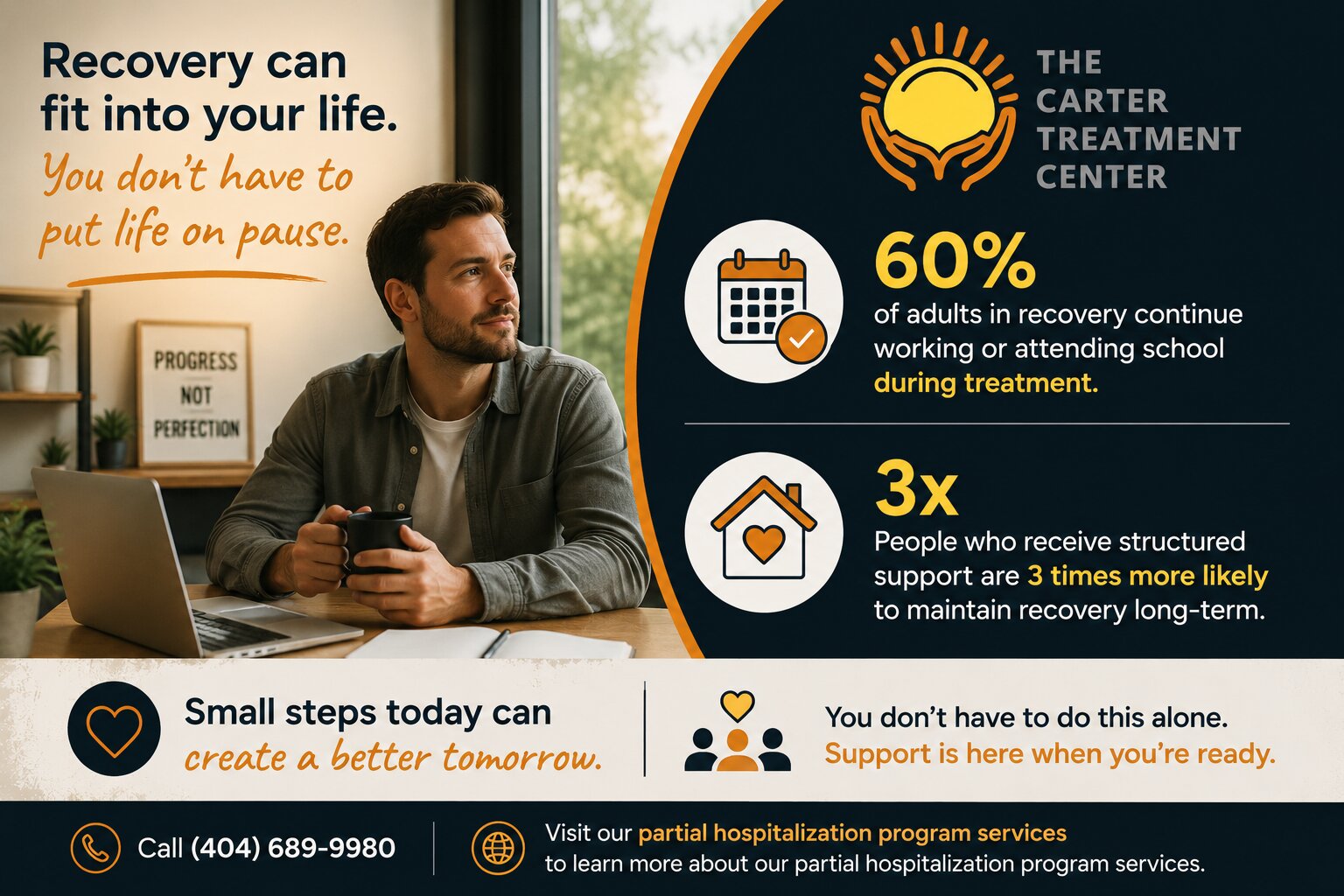
Step 3: Understand That Treatment Can Fit Into Real Life
One reason people avoid seeking help is the belief that treatment and everyday life can’t coexist.
Work obligations feel overwhelming.
Family responsibilities feel non-negotiable.
Financial concerns feel real.
These concerns matter.
Fortunately, treatment planning often takes these realities into account.
People searching for addiction help without inpatient are usually looking for options that allow them to remain connected to important parts of their lives while receiving meaningful support.
Depending on individual circumstances, some treatment approaches provide intensive therapeutic support during the day while allowing individuals to return home afterward.
That flexibility can make treatment feel far more accessible to someone who wants help but feels unable to leave everything behind.
Step 4: Focus on the Next Right Step, Not the Entire Journey
One thing that keeps people stuck is trying to solve every future problem before taking the first action.
Questions begin piling up:
- What if treatment works?
- What if it doesn’t?
- What will people think?
- How will I explain this?
- What happens after treatment?
These questions are understandable.
But they can also become a form of paralysis.
Recovery is rarely built through giant leaps. More often, it’s built through a series of manageable decisions.
The next right step might simply be making a phone call.
It might be scheduling an assessment.
It might be having an honest conversation with someone you trust.
You don’t have to map the entire road to start walking.
Step 5: Build Support Before You Feel Desperate
One common misconception is that support is only necessary after things fall apart.
In reality, support works best when it’s built before a crisis occurs.
Think about any major challenge in life. Most people perform better when they have guidance, encouragement, and accountability along the way.
Recovery is no different.
Support can come from many places:
- Therapists
- Treatment professionals
- Peer support groups
- Trusted family members
- Friends who respect your goals
The important thing isn’t building a perfect support system overnight.
It’s creating enough connection that you’re not carrying everything alone.
A single conversation can sometimes create more momentum than months of silent worrying.
Step 6: Give Yourself Permission to Explore Without Committing
Many people hesitate to call a treatment center because they assume they’re signing up for something the moment they ask a question.
That fear keeps countless individuals stuck.
The reality is much simpler.
Asking questions is not a commitment.
Learning about options is not a commitment.
Scheduling an assessment is not a commitment.
Exploration is simply information gathering.
For someone who is sober curious, this distinction matters.
You don’t have to arrive ready to change your entire life tomorrow. You can start by learning what’s available and deciding whether any of those options fit your goals.
Often, the uncertainty surrounding treatment feels much scarier than treatment itself.
Step 7: Remember That Seeking Help Is a Strength
Many people delay treatment because they believe needing help means they’ve failed.
But consider how often we accept support in other areas of life.
We hire coaches to improve athletic performance.
We work with teachers to learn new skills.
We consult doctors when something feels wrong physically.
Seeking support for substance use follows the same logic.
It isn’t weakness.
It’s a willingness to stop carrying a burden by yourself.
The people who reach out for help aren’t giving up control. They’re taking an active role in improving their future.
That’s an important distinction.
Recovery Doesn’t Have to Start With a Crisis
Popular culture often portrays recovery as something that begins after a dramatic rock-bottom moment.
For many people, that’s simply not true.
Recovery can start much earlier.
It can start when you’re tired of making excuses.
It can start when you’re curious about whether life might feel better without alcohol or substances playing such a large role.
It can start when you notice that your habits no longer align with the person you want to be.
You don’t need to prove you’re struggling enough.
You only need to acknowledge that something feels worth exploring.
If you’re looking at treatment possibilities while remaining connected to your responsibilities, learning about available care in metro atlanta can help you better understand what support options may fit your needs.
Sometimes recovery doesn’t begin with certainty.
Sometimes it begins with curiosity.
And curiosity is enough to take the first step.
Frequently Asked Questions
Do I have to leave home to get addiction treatment?
Not always. Treatment recommendations vary based on individual needs, substance use history, safety concerns, and other factors. Some people receive structured support while continuing to live at home.
What if I’m not sure I have a problem?
You don’t need to be certain to start asking questions. Many people begin exploring treatment because they’re concerned about their relationship with substances, not because they’ve reached a definitive conclusion.
Can I continue working while getting help?
Depending on your situation and treatment recommendations, some levels of care may offer flexibility that allows individuals to maintain certain work or family responsibilities.
Is treatment only for people who have hit rock bottom?
No. Many people seek support long before experiencing severe consequences. Early intervention can often make recovery easier and help prevent problems from becoming more serious.
What happens during an assessment?
An assessment typically involves discussing your substance use history, mental health, physical health, support system, and personal goals. The purpose is to understand your needs and recommend appropriate care.
Will people find out I’m seeking help?
Treatment providers take confidentiality seriously. If privacy concerns are keeping you from reaching out, discussing those concerns directly with a provider can help clarify how your information is protected.
What if I’m scared to start?
That’s completely normal.
Many people feel nervous, uncertain, or even skeptical before taking the first step. Fear doesn’t mean you’re making the wrong decision. It often means you’re considering something important.
You don’t have to have everything figured out before reaching out for help. You don’t need a perfect plan. You don’t need absolute certainty.
You just need enough willingness to explore what might be possible.
Call (404) 689-9980 or visit our partial hospitalization program services to learn more about our partial hospitalization program services Alpharetta, GA.