


If you’re reading this after another relapse, there’s a good chance you’re carrying around more than disappointment.
You’re carrying exhaustion.
Not just from substance use. Not just from recovery.
From trying.
Trying to stay sober.
Trying to keep promises.
Trying to convince yourself that this time will be different.
Trying to explain to people why you’re struggling again.
For many people, the hardest part isn’t the relapse itself. It’s the story they tell themselves afterward.
“I should know how to do this by now.”
“I’ve already been through treatment.”
“Other people seem to figure it out.”
“Maybe I’m just not capable of staying sober.”
If those thoughts sound familiar, we want you to know something important:
Needing more support doesn’t mean you’re failing.
Sometimes it means you’ve finally identified what’s missing.
If counseling alone hasn’t been enough, learning about a more structured recovery approach may help you understand why recovery often becomes more manageable when support extends beyond a single weekly appointment.
Step 1: Stop Using Relapse as Evidence Against Yourself
Many people treat relapse like a verdict.
One relapse becomes proof they’re broken.
Two relapses become proof treatment doesn’t work.
Several relapses become proof they’re beyond help.
But relapse isn’t evidence about your worth.
It’s information.
It tells you something about the support, structure, coping skills, triggers, or recovery plan that existed before it happened.
Think about it this way.
If someone repeatedly injured the same knee while running, a doctor wouldn’t conclude they were incapable of healing.
They would examine what keeps causing the injury.
Recovery deserves the same mindset.
The goal isn’t assigning blame.
The goal is understanding what needs to change.
Step 2: Look Honestly at the Space Between Appointments
A lot can happen in a week.
That’s especially true when you’re trying to stay sober.
One therapy session may provide insight, encouragement, and accountability. But what happens after you leave?
What happens during:
- Stressful workdays?
- Lonely evenings?
- Family conflicts?
- Financial pressure?
- Unexpected cravings?
- Emotional triggers?
For some people, weekly counseling works well.
For others, recovery starts unraveling in the days between sessions.
That’s not a sign that therapy is ineffective.
It may simply mean you need more frequent support while building stronger recovery habits.
Step 3: Stop Expecting Motivation to Carry Recovery
One of the biggest myths in recovery is that people stay sober because they want it badly enough.
Most people who relapse wanted sobriety.
Many wanted it desperately.
Motivation matters.
But motivation changes.
It rises and falls depending on stress, sleep, emotions, relationships, and life circumstances.
Successful recovery plans don’t rely entirely on motivation.
They create systems that continue working even when motivation disappears.
That’s why structure is often so powerful.
When recovery becomes part of your routine, you don’t have to reinvent your commitment every morning.
Step 4: Identify What Happens Before the Relapse
Most relapses don’t begin with substance use.
They begin much earlier.
Often there are warning signs.
You may start isolating.
You may stop answering calls.
You may skip meetings.
You may stop using healthy coping skills.
You may convince yourself you’re doing fine when you’re actually struggling.
Many people focus entirely on the moment they used.
Recovery becomes easier when you start paying attention to the days and weeks before that moment.
Patterns matter.
Patterns often reveal opportunities for intervention long before a relapse occurs.
Step 5: Replace Shame With Curiosity
Shame is one of addiction’s favorite hiding places.
It convinces people they don’t deserve support.
It convinces them to disappear after a relapse.
It convinces them that treatment providers are disappointed in them.
It convinces them not to come back.
Curiosity asks different questions.
Instead of:
“What’s wrong with me?”
Curiosity asks:
“What happened?”
Instead of:
“Why can’t I stay sober?”
Curiosity asks:
“What support am I missing?”
Those questions create room for growth.
Shame usually creates isolation.
And isolation rarely helps recovery.
Step 6: Understand Why More Structure Sometimes Helps
Many people reach a point where they realize they don’t necessarily need a completely different recovery goal.
They need a different recovery environment.
This is often where additional structure becomes valuable.
When recovery receives multiple touchpoints throughout the week, people have more opportunities to:
- Practice coping skills
- Process challenges in real time
- Receive accountability
- Build community
- Strengthen routines
- Address setbacks early
Recovery becomes less about surviving until the next appointment and more about creating consistent momentum.
For some people, that’s the difference between repeatedly starting over and finally moving forward.
Step 7: Stop Seeing Treatment as Something You Already Failed
If you’ve left treatment before, ghosted appointments, stopped answering calls, or disappeared after a relapse, you may feel embarrassed about returning.
We understand that feeling.
Many people worry they’ll be judged.
They imagine someone pulling up their file and shaking their head.
That’s usually not what happens.
Most treatment professionals have worked with people who left and returned.
Many have worked with people who left multiple times.
Recovery rarely follows a straight line.
People come back every day.
And they’re welcomed back every day.
The door is often much more open than people imagine.
Why Community Matters More Than Most People Realize
Addiction often creates isolation long before people notice it.
Social circles shrink.
Conversations become superficial.
Secrets multiply.
People begin carrying more and more of their struggle alone.
Recovery works differently.
It tends to grow through connection.
Not because community magically removes cravings.
Not because support eliminates difficult emotions.
But because recovery becomes easier when you’re not the only person carrying it.
A good recovery environment reminds you that setbacks happen.
It reminds you that growth is possible.
And sometimes it reminds you to keep going when you’ve forgotten why you started.
When Counseling Isn’t the Wrong Answer—Just an Incomplete One
This is an important distinction.
Many people assume that if they relapse after counseling, counseling must have failed.
That’s not necessarily true.
Counseling may have helped.
It may have provided insight, awareness, and emotional support.
But insight alone doesn’t always create behavior change.
Recovery often requires practice.
Practice requires repetition.
And repetition usually requires support.
That’s why many relapse prevention programs focus on creating consistent opportunities to apply recovery skills throughout the week rather than relying solely on one appointment.
The goal isn’t to replace therapy.
The goal is to strengthen everything happening around it.
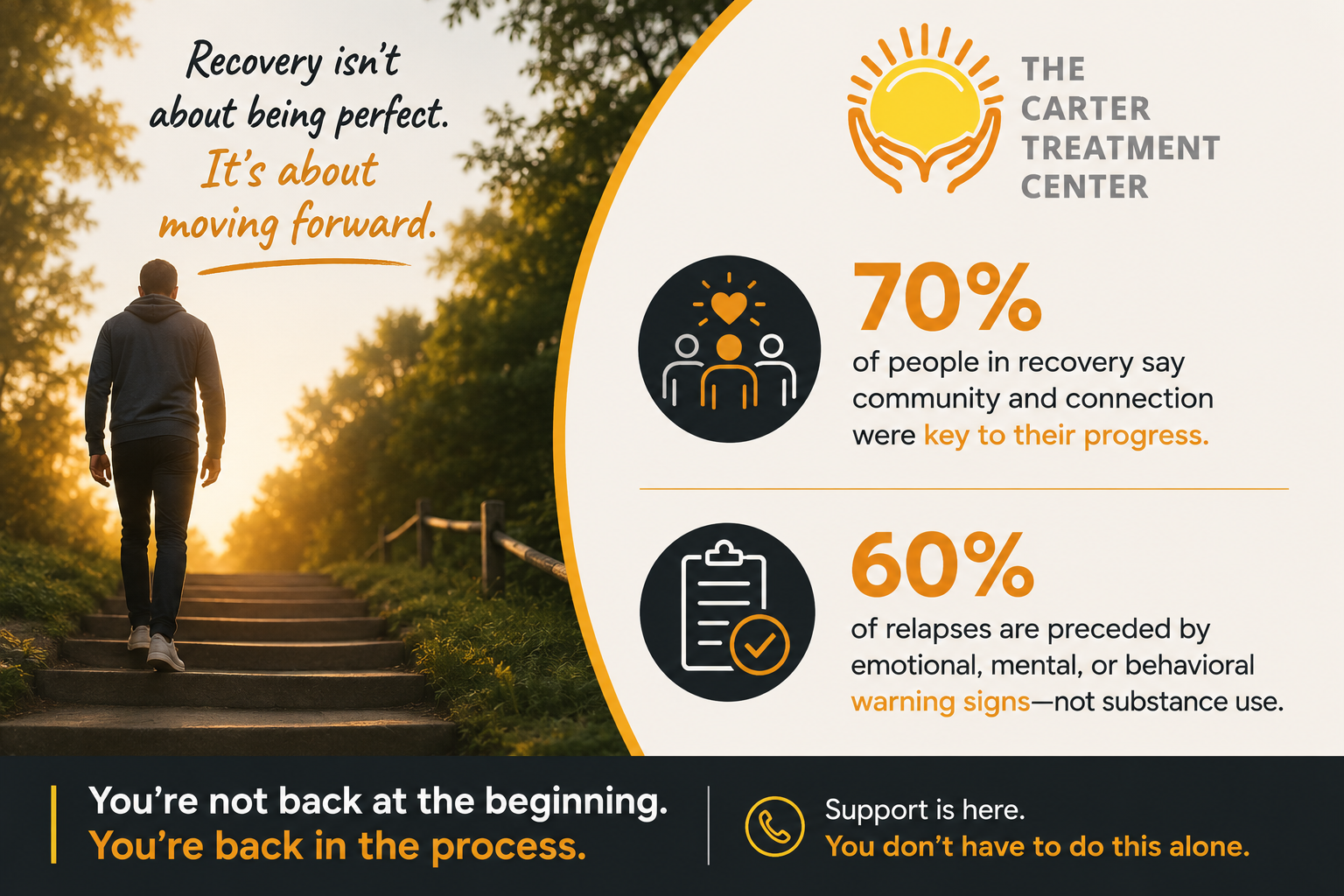
You Are Not Back at the Beginning
This may be the most important thing in this article.
If you’ve relapsed, you’re not automatically back where you started.
You still have knowledge.
You still have experience.
You still have insight.
You still know things today that you didn’t know before.
Relapse can feel like losing all your progress.
Most of the time, that’s not actually true.
Recovery isn’t erased by a setback.
It’s interrupted by one.
And interrupted things can continue.
If you’re exploring options for care in metro atlanta, understanding the different levels of support available can help you find a recovery plan that feels realistic rather than overwhelming.
Frequently Asked Questions
Why do I keep relapsing after counseling?
There can be many reasons. Some people need more structure, accountability, skill-building, or support between therapy sessions. Relapse often points to unmet recovery needs rather than a lack of effort.
Does relapse mean treatment didn’t work?
No. Many people learn valuable skills during treatment even if they later relapse. Recovery is often a process of applying, refining, and strengthening those skills over time.
Should I go back to treatment if I already dropped out once?
Yes, if you feel you need support. Leaving treatment doesn’t permanently close the door. Many people return after interruptions in care and continue making progress.
What if I’m embarrassed to come back?
That’s extremely common. Most treatment providers understand that recovery includes setbacks, missed appointments, and periods of disengagement. You’re unlikely to surprise anyone.
How do I know if I need more support than weekly therapy?
If you repeatedly struggle between sessions, experience frequent relapses, feel isolated, or have difficulty applying coping skills consistently, it may be worth exploring additional support options.
Are relapse prevention programs only for people who recently relapsed?
No. Many people participate in relapse prevention programs proactively to strengthen recovery skills and reduce the likelihood of future setbacks.
What if I don’t trust myself anymore?
That feeling is common after multiple relapses.
Trust is often rebuilt through small actions repeated consistently over time. Recovery isn’t about believing yourself overnight. It’s about creating evidence that you can follow through again.
You don’t need to explain why you disappeared.
You don’t need a perfect apology.
You don’t need proof that this time will be different.
You only need enough willingness to take the next step.
Call (404) 689-9980 or visit our intensive outpatient program services to learn more about our intensive outpatient program services Alpharetta, GA.