


The word “narcissist” is used frequently on social media and in everyday conversations.
Sometimes it describes someone who appears arrogant, attention-seeking, or self-centered.
Other times, it refers to someone who seems quiet, withdrawn, or unusually sensitive to criticism.
This difference often leads people to wonder whether there are different kinds of narcissism.
One term that has gained significant attention is covert narcissist.
Unlike the loud, confident stereotype many people imagine, covert narcissistic traits may appear much more subtle. Some individuals seem shy, insecure, or reserved while still struggling with deep patterns involving self-esteem, interpersonal relationships, and sensitivity to criticism.
It is important to understand, however, that the term “covert narcissist” is not an official DSM-5 diagnosis. Instead, mental health professionals may use it to describe vulnerable or introverted traits that can occur in some people with Narcissistic Personality Disorder (NPD) or significant narcissistic personality features.
Most importantly, personality disorders are mental health conditions—not character flaws. With appropriate care, many people can develop healthier ways of relating to themselves and others. At The Carter Treatment Center, we provide compassionate, evidence-based personality disorder treatment for adults throughout North Atlanta, including Alpharetta, Cumming, and Jefferson.
What a Covert Narcissist Is
When clinicians discuss covert narcissism, they are generally referring to a pattern sometimes called vulnerable narcissism.
Unlike grandiose narcissism, which is often associated with obvious confidence and a need for admiration, vulnerable narcissism tends to involve:
- Fragile self-esteem
- Intense sensitivity to criticism
- Feelings of inadequacy
- Hidden beliefs of being misunderstood or unappreciated
- Difficulty regulating emotions
- Challenges maintaining healthy relationships
Although the outward presentation differs, both vulnerable and grandiose narcissistic patterns may involve an underlying need for validation and difficulty coping with perceived rejection.
Not everyone who demonstrates these traits meets the diagnostic criteria for Narcissistic Personality Disorder.
A diagnosis requires a comprehensive evaluation by a qualified mental health professional.
Signs of Covert Narcissism
Because vulnerable narcissism is less outwardly obvious, the signs can be difficult to recognize.
No single behavior confirms that someone has Narcissistic Personality Disorder.
Instead, clinicians look for long-standing patterns that affect relationships, work, and overall functioning.
Common characteristics may include:
Persistent Victimhood Narratives
Some individuals consistently perceive themselves as misunderstood, overlooked, or unfairly treated.
While genuine hardships certainly occur, a recurring pattern may involve attributing nearly every conflict to other people’s behavior without recognizing one’s own role.
Passive-Aggressive Communication
Rather than expressing anger directly, emotions may appear through:
- Sarcasm
- Silent treatment
- Indirect criticism
- Withdrawing affection
- Subtle resentment
This indirect communication can create confusion and strain relationships.
Extreme Sensitivity to Criticism
Even gentle feedback may feel deeply painful.
Someone may respond by:
- Becoming defensive
- Withdrawing emotionally
- Holding grudges
- Interpreting neutral comments as personal attacks
Because self-esteem is often fragile, criticism can feel overwhelming.
Quiet Feelings of Superiority
Unlike overt narcissism, these beliefs are often kept private.
Someone may quietly believe:
- Others fail to appreciate their abilities.
- They deserve greater recognition.
- People around them simply “do not understand.”
These thoughts may coexist with significant self-doubt.
Difficulty Accepting Responsibility
Mistakes may be explained through external circumstances rather than personal accountability.
Protecting self-esteem can sometimes make admitting fault feel emotionally threatening.
Emotional Withdrawal
Some people avoid closeness because relationships increase the possibility of rejection.
As a result, they may appear emotionally distant despite wanting connection.
Covert vs. Overt Narcissism: Key Differences
Both vulnerable and grandiose narcissistic patterns may involve a strong need for validation and difficulty managing criticism.
The primary difference lies in how these needs are expressed.
| Covert Traits | Overt Traits |
|---|---|
| More reserved | More outgoing |
| Sensitive to criticism | Openly dismissive of criticism |
| Self-doubt alongside entitlement | Obvious confidence and superiority |
| Passive-aggressive communication | Direct dominance or confrontation |
| Quiet need for recognition | Visible desire for admiration |
Despite these differences, both patterns can significantly affect relationships and emotional well-being.
How Covert Narcissism Affects Relationships
Relationships often become difficult because underlying emotional needs remain unaddressed.
Partners, family members, and friends may notice recurring patterns of misunderstanding without fully understanding why.
Common relationship challenges include:
Communication Difficulties
Rather than discussing hurt feelings directly, emotions may remain unspoken until resentment builds.
Misunderstandings become increasingly common.
Fear of Rejection
Even minor disagreements may be experienced as evidence that the relationship is failing.
This can contribute to withdrawal, defensiveness, or emotional distance.
Chronic Conflict
Because criticism feels intensely personal, everyday disagreements sometimes become much larger than intended.
Both people may leave conversations feeling unheard.
Emotional Instability
Relationships can fluctuate between closeness and withdrawal depending on how secure someone feels in the relationship.
This inconsistency may create confusion for both partners.
Isolation
Over time, repeated interpersonal difficulties may contribute to loneliness, despite a strong desire for acceptance and connection.
Treatment at Carter
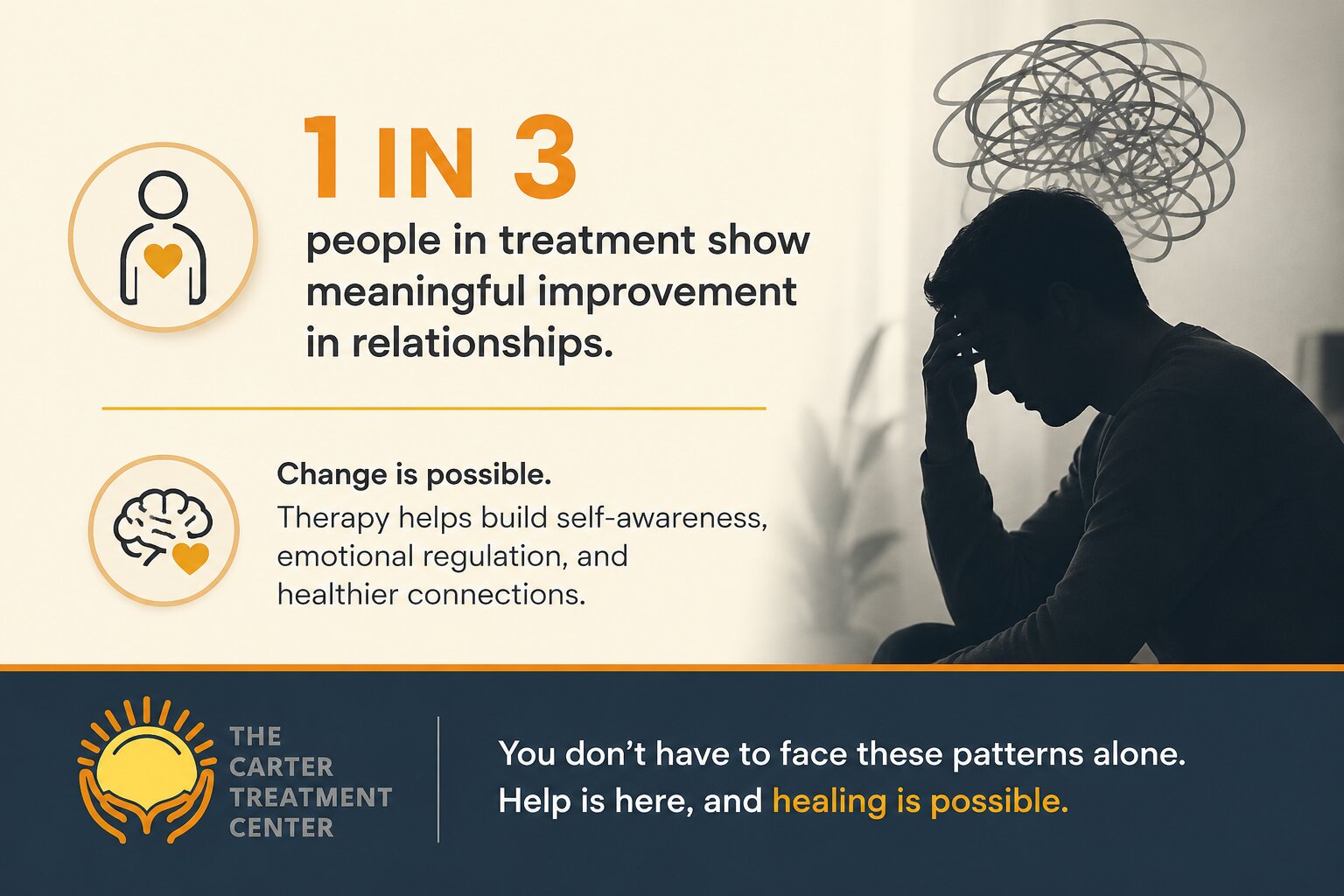
Although personality disorders can be complex, meaningful improvement is possible.
Treatment focuses not on changing who someone is, but on helping them build healthier ways of understanding themselves, regulating emotions, and relating to others.
At The Carter Treatment Center, care begins with a comprehensive mental health evaluation to understand each person’s symptoms, history, strengths, and treatment goals.
Depending on individual needs, treatment may include:
Individual Psychotherapy
Therapy provides a safe environment to explore long-standing emotional patterns while developing healthier coping strategies.
Over time, individuals can learn to recognize automatic reactions, improve self-awareness, and strengthen interpersonal relationships.
Dialectical Behavior Therapy (DBT)
DBT teaches practical skills for:
- Emotional regulation
- Distress tolerance
- Mindfulness
- Interpersonal effectiveness
These skills can help individuals respond to difficult emotions in more balanced ways.
Schema Therapy
Schema therapy focuses on identifying deeply rooted beliefs that often develop during childhood or adolescence.
Addressing these long-standing patterns may improve self-esteem, emotional regulation, and relationship functioning.
Addressing Co-Occurring Conditions
Many individuals with personality disorders also experience:
- Anxiety
- Depression
- Trauma-related symptoms
- Substance use concerns
Treating these conditions alongside personality-related patterns often leads to more comprehensive improvement.
Long-Term Growth
Personality patterns typically develop over many years.
Meaningful change therefore takes time.
With commitment, therapeutic support, and evidence-based care, many individuals experience healthier relationships, greater emotional stability, and improved quality of life.
When to Seek Professional Support
It may be helpful to speak with a mental health professional if:
- Relationship difficulties occur repeatedly.
- Criticism feels overwhelmingly painful.
- Emotional reactions seem difficult to control.
- You often feel misunderstood or isolated.
- Low self-esteem and shame interfere with daily life.
- Long-standing interpersonal patterns cause distress.
Seeking support is not an admission of failure.
It is an opportunity to better understand yourself and develop healthier ways of navigating life’s challenges.
Final Thoughts
The term “covert narcissist” is often used online, but behind the label is a more important reality: some people struggle with long-standing patterns involving self-esteem, emotional regulation, and relationships that cause significant distress for themselves and those around them.
Rather than viewing these patterns as fixed personality flaws, it is more helpful to understand them through a compassionate clinical lens. Personality disorders are complex mental health conditions, and many individuals benefit from evidence-based therapy that helps them build greater self-awareness, healthier coping strategies, and more satisfying relationships.
At The Carter Treatment Center, we provide individualized outpatient mental health services for adults throughout Alpharetta, Cumming, Jefferson, and the greater North Atlanta area.
If you recognize persistent relationship patterns or emotional challenges in yourself, professional support can help you better understand what you are experiencing and begin working toward meaningful, lasting change.
Frequently Asked Questions
What is a covert narcissist?
A covert narcissist is a commonly used term for someone who displays vulnerable or introverted narcissistic traits, such as hypersensitivity to criticism, fragile self-esteem, passive-aggressive communication, and a strong need for validation. It is not an official DSM-5 diagnosis but may describe one way Narcissistic Personality Disorder or narcissistic traits can present.
What is the difference between covert and overt narcissism?
Covert narcissism tends to involve quieter, more vulnerable expressions of narcissistic traits, while overt narcissism is generally associated with more obvious confidence, grandiosity, and a visible need for admiration. Both patterns can involve underlying self-esteem difficulties and interpersonal challenges.
Can a covert narcissist change?
Yes. Although changing long-standing personality patterns can take time, evidence-based therapies such as Dialectical Behavior Therapy (DBT), Schema Therapy, and other forms of psychotherapy can help individuals improve emotional regulation, increase self-awareness, strengthen relationships, and develop healthier coping strategies.