


For years, you may have been told the same thing.
“Just get organized.”
“You need to focus.”
“Try harder.”
So you did.
You made endless to-do lists. You stayed up late catching up on work. You pushed yourself through exhaustion because everyone else seemed able to keep up. You learned to hide your struggles, double-check everything, and spend twice as much energy completing everyday tasks that seemed effortless for other people.
Eventually, something changed.
The strategies that once helped you survive stopped working.
Simple responsibilities suddenly felt impossible. Emails piled up. Laundry sat untouched. Conversations became draining. Even things you normally enjoyed required more energy than you had.
If this sounds familiar, you may be experiencing ADHD burnout.
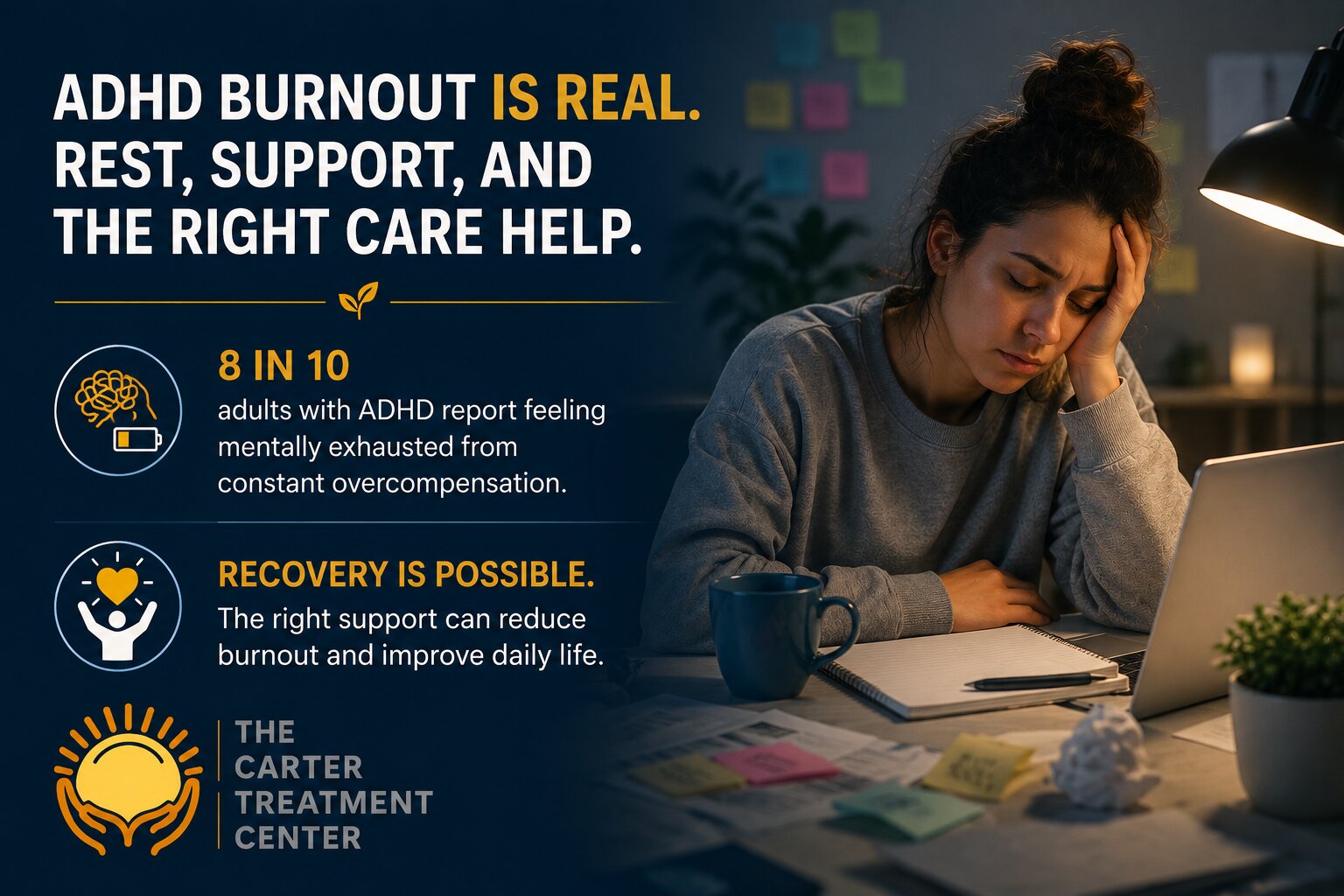
Unlike ordinary stress, ADHD burnout often develops after years of constantly overcompensating for executive functioning challenges. It can leave people emotionally exhausted, mentally depleted, and wondering why they have suddenly “fallen apart.”
The good news is that this experience is real, understandable, and treatable. At The Carter Treatment Center, we help adults throughout North Atlanta—including Alpharetta, Cumming, and Jefferson—better understand attention-related challenges and access compassionate ADHD treatment as part of comprehensive outpatient mental health care.
What ADHD Burnout Is
Most people think burnout only happens because someone works too many hours.
ADHD burnout is different.
It often develops after spending months—or even years—using extraordinary amounts of mental effort just to appear as though everything is under control.
Many adults with ADHD become experts at compensating.
They may:
- Stay awake until midnight finishing tasks they couldn’t start earlier.
- Constantly reread emails before sending them.
- Depend on anxiety to motivate themselves.
- Create dozens of reminders to avoid forgetting responsibilities.
- Work much harder than others simply to achieve average results.
From the outside, they appear highly capable.
Inside, they are using enormous amounts of mental energy every single day.
Eventually, that constant effort becomes unsustainable.
A common cycle looks like this:
Overcompensating
You push yourself beyond your limits.
You work longer hours.
You rely on perfectionism.
You ignore exhaustion because responsibilities cannot wait.
The Crash
Eventually your brain runs out of energy.
Executive functioning becomes dramatically worse.
Tasks that once felt manageable suddenly feel impossible.
Shame
Instead of recognizing burnout, many people blame themselves.
They think:
- “I’m lazy.”
- “I’m failing.”
- “Everyone else can do this.”
- “I just need more discipline.”
Overcompensating Again
Feeling guilty, they push even harder.
The cycle repeats.
Over time, each cycle becomes more exhausting.
Signs of ADHD Burnout
ADHD burnout affects much more than productivity.
It often impacts nearly every part of daily life.
Common symptoms include:
Extreme Mental Exhaustion
This isn’t ordinary tiredness.
People often describe feeling mentally empty, even after sleeping.
Thinking becomes difficult.
Decision-making slows.
Simple planning feels overwhelming.
Emotional Shutdown
After prolonged stress, emotions sometimes become difficult to access.
Instead of sadness or anxiety, people simply feel numb.
Others experience irritability because they no longer have emotional energy left.
Executive Function Seems to Disappear
Tasks that once felt difficult suddenly become nearly impossible.
People may struggle with:
- Starting tasks
- Prioritizing
- Organizing
- Time management
- Following conversations
- Remembering appointments
- Completing basic household chores
The brain simply cannot maintain the same level of effort anymore.
Withdrawal From Others
Socializing requires mental energy.
When someone reaches burnout, they often begin avoiding:
- Phone calls
- Text messages
- Family gatherings
- Friends
- Workplace conversations
This withdrawal is usually not because they no longer care.
They simply have nothing left to give.
Increased Emotional Sensitivity
Minor setbacks suddenly feel overwhelming.
Receiving constructive feedback may trigger intense self-criticism.
Small mistakes can feel catastrophic.
Constant Feeling of Falling Behind
Even when completing tasks, people often feel they are always catching up.
The finish line never seems to move closer.
Why ADHD Makes Burnout Worse
Living with ADHD often means the brain works harder throughout the day than many people realize.
Several factors contribute to burnout.
Masking
Many adults spend years hiding ADHD symptoms.
They force themselves to appear organized.
They rehearse conversations.
They suppress impulsive behaviors.
They double-check every assignment.
They constantly monitor how others perceive them.
Masking may help someone fit in socially or professionally, but it comes at a significant psychological cost.
Maintaining that level of self-monitoring day after day consumes tremendous mental energy.
Executive Function Requires Constant Effort
Planning.
Prioritizing.
Managing time.
Switching between tasks.
Remembering deadlines.
These executive functions often require deliberate effort for someone with ADHD instead of occurring automatically.
That ongoing mental work contributes to chronic exhaustion.
Rejection-Sensitive Dysphoria (RSD)
Although not part of the formal diagnostic criteria, many people with ADHD describe experiencing intense emotional pain after criticism, rejection, or perceived failure.
Even small disappointments may trigger hours—or days—of self-doubt.
This emotional intensity adds another layer of stress that can accelerate burnout.
Living in Survival Mode
Many adults rely on urgency to accomplish tasks.
Deadlines.
Last-minute pressure.
Fear of disappointing others.
These strategies may work temporarily, but living in a constant state of urgency keeps the nervous system under ongoing stress.
Eventually, the brain cannot maintain that pace.
Never Reaching Equilibrium
People without ADHD often experience periods where responsibilities temporarily slow down.
Many individuals with ADHD never feel that sense of balance.
One unfinished task immediately leads to another.
One forgotten responsibility creates three more.
The feeling of constantly “catching up” rarely ends.
ADHD Burnout vs. Depression
Because ADHD burnout can involve exhaustion, low motivation, and withdrawal, it is sometimes mistaken for depression.
The two conditions share some overlapping symptoms, but they are not the same.
ADHD Burnout Often Includes
- Mental exhaustion after prolonged effort
- Worsening executive functioning
- Feeling overwhelmed by everyday tasks
- Temporary loss of productivity
- Improvement after reducing demands and receiving appropriate support
Depression Often Includes
- Persistent sadness or emptiness
- Loss of pleasure in previously enjoyable activities
- Feelings of hopelessness
- Low self-worth
- Changes in appetite or sleep
- Symptoms that continue even when external demands decrease
Some people experience both ADHD and depression at the same time.
Because the treatments can differ, obtaining a thorough mental health evaluation is important rather than assuming one condition explains every symptom.
Recovering From ADHD Burnout—and Getting Support
Recovery is not about trying harder.
In fact, continuing to push through severe burnout often makes recovery take longer.
Instead, treatment focuses on reducing the mental load your brain has been carrying.
Recognize That Burnout Is Real
Many people spend years believing they are simply lazy.
Understanding that ADHD burnout reflects prolonged mental strain—not a personal failure—can reduce shame and open the door to recovery.
Reduce Unnecessary Demands
Recovery may involve identifying areas where expectations can become more realistic.
Small adjustments to routines, workload, and responsibilities can make a meaningful difference over time.
Prioritize Rest Without Guilt
Rest is not the same as giving up.
Intentional recovery time allows the brain to regain some of the energy needed for planning, attention, and emotional regulation.
Build Sustainable Systems
Instead of relying solely on memory or motivation, many people benefit from external supports such as:
- Digital reminders
- Calendars
- Structured routines
- Task breakdowns
- Visual organizers
These tools reduce the cognitive effort required to manage daily responsibilities.
Address Co-Occurring Conditions
Anxiety, depression, sleep disorders, and other mental health concerns often occur alongside ADHD and can intensify burnout.
Treating all contributing conditions provides a stronger foundation for recovery.
Professional Support Can Reduce the Load
You should not have to spend every day relying on willpower just to function.
At The Carter Treatment Center, outpatient mental health services are individualized to each person’s needs. Depending on your evaluation, treatment may include medication management, therapy, skills training, education, and strategies to improve executive functioning while reducing the constant pressure to overcompensate.
Rather than simply asking you to work harder, treatment focuses on helping you work with your brain instead of against it.
When to Seek Professional Help
It may be time to reach out if:
- You feel mentally exhausted most days.
- Basic responsibilities have become overwhelming.
- You constantly blame yourself despite trying your hardest.
- You notice increasing withdrawal from family or friends.
- Burnout is affecting your work, school, or relationships.
- You are unsure whether your symptoms relate to ADHD, depression, anxiety, or another condition.
An accurate evaluation can help clarify what is happening and guide you toward effective support.
Final Thoughts
Many adults with ADHD spend years believing their exhaustion is simply the price of success. They become experts at masking symptoms, pushing through fatigue, and relying on willpower until their minds and bodies finally refuse to keep going.
ADHD burnout is not a sign that you are weak, lazy, or incapable. It is often the result of carrying an invisible cognitive and emotional workload for far too long.
Recovery begins with understanding what your brain has been managing all along. With the right support, practical strategies, and individualized outpatient care, it is possible to reduce burnout, improve daily functioning, and build a life that feels more sustainable—not because you are trying harder, but because you finally have the right tools.
At The Carter Treatment Center, we provide compassionate outpatient mental health services for adults across Alpharetta, Cumming, Jefferson, and the greater North Atlanta area. If you’re feeling overwhelmed, exhausted, and unsure why everything suddenly feels harder than it used to, professional support can help you find answers and move forward with confidence.
Frequently Asked Questions
What is ADHD burnout?
ADHD burnout is a state of intense physical, mental, and emotional exhaustion that can develop after prolonged effort to manage ADHD symptoms. It often involves worsening executive functioning, emotional overwhelm, withdrawal, and difficulty completing everyday tasks after months or years of overcompensating.
Is ADHD burnout the same as depression?
No. Although ADHD burnout and depression share symptoms such as fatigue, low motivation, and withdrawal, they are distinct conditions. ADHD burnout is often linked to prolonged cognitive strain and may improve with reduced demands and appropriate ADHD support, while depression involves persistent mood changes and other symptoms that require their own evaluation and treatment. Some people experience both conditions at the same time.
How do you recover from ADHD burnout?
Recovery typically involves recognizing the burnout cycle, reducing unnecessary demands, prioritizing restorative rest, building supportive routines, addressing co-occurring mental health concerns, and working with a qualified mental health professional. Individualized treatment can help reduce the ongoing cognitive load that contributes to burnout.