


Nobody talks enough about the space between “doing fine” and completely relapsing.
That strange middle ground can be one of the loneliest places in recovery.
I wasn’t drinking every day again. I hadn’t disappeared for a weekend or burned my life down. From the outside, I looked mostly okay. But internally, I could feel old patterns quietly circling me like sharks just beneath the surface.
I stopped answering calls from sober friends.
I started romanticizing the “good parts” of drinking again.
I began telling myself I was exhausted because of work, stress, or life—not because my recovery was slipping out of my hands.
Deep down, though, I knew something was wrong.
One afternoon after therapy, I sat in my car gripping the steering wheel so hard my hands hurt. I remember thinking, I don’t think one hour a week is enough anymore.
That thought scared me.
Because part of me believed needing more help meant I had failed.
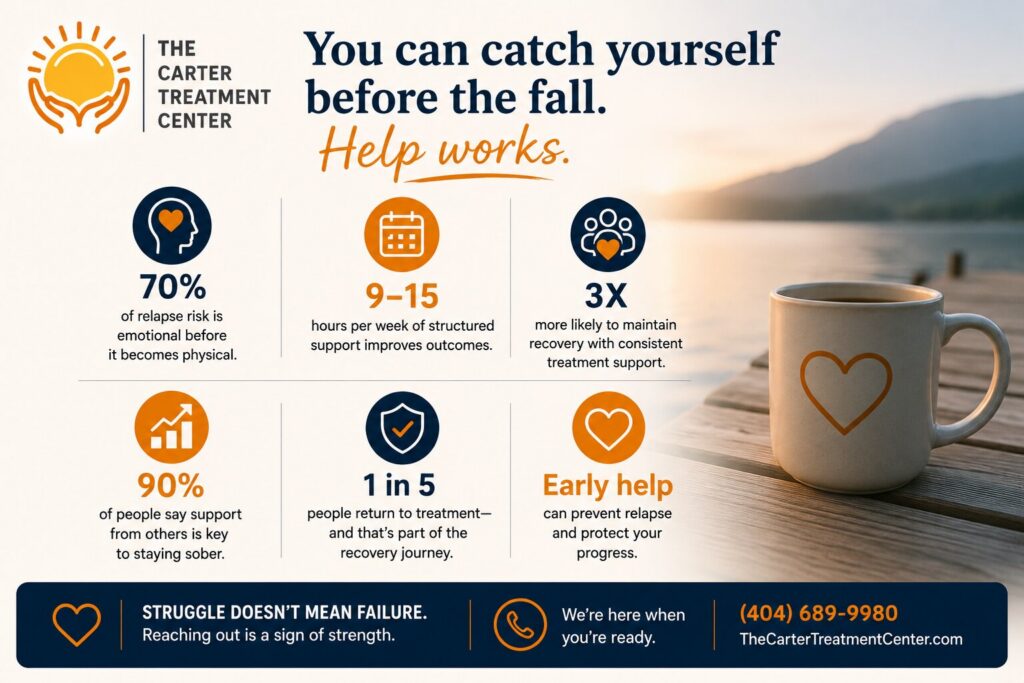
Eventually, I found structured daytime care, and honestly, it didn’t feel like starting over. It felt like catching myself before the floor disappeared completely.
The Relapse Started Emotionally Before Anything Else
I think that’s important to say out loud.
For me, relapse didn’t begin with a drink. It started with emotional disconnection.
I stopped being honest about how overwhelmed I felt.
I stopped talking about the thoughts that scared me.
I stopped asking for help because I thought I “should” be further along by now.
There’s a specific shame that can hit alumni after 90 days—or even years—of sobriety. People start assuming you’re okay. Sometimes you start assuming you have to be okay too.
So when cracks begin showing up again, you hide them.
That’s what I did.
I minimized everything because technically, I hadn’t fallen all the way back. But internally, I felt myself drifting toward old survival habits. It was like standing too close to the ocean during a storm and pretending you didn’t notice the tide pulling harder at your feet.
I Kept Telling Myself I Could Handle It Alone
That’s the dangerous part about being “high-functioning” in recovery.
You can suffer quietly for a long time.
I still went to work.
Still showed up for family dinners.
Still made jokes.
Still answered “How are you?” with something believable enough that nobody looked closer.
Meanwhile, my brain felt loud all the time.
I thought about drinking constantly—not always because I wanted to party or escape dramatically, but because I missed the relief. I missed the pause button. I missed not feeling emotionally exhausted every second of the day.
And because I hadn’t fully relapsed yet, I convinced myself I didn’t deserve more support.
That thinking almost cost me everything.
Therapy Helped Me Understand Myself—But I Needed More Containment
I want to say this carefully because therapy mattered to me. It still does.
But there came a point where weekly sessions felt like putting a small bandage over something that needed stitches.
I could unpack painful emotions for one hour every Tuesday, then spend the rest of the week alone inside my own spiraling thoughts.
There wasn’t enough structure holding me together between sessions.
That’s what eventually led me to researching different treatment options, including support connected to day treatment program mental health care. What stood out wasn’t the clinical side of it. It was the idea of consistency.
Daily support.
Daily accountability.
Daily connection.
At that point, I didn’t need someone to “fix” me. I needed help interrupting the momentum I was building toward relapse.
Because once your mind starts negotiating with addiction again, things can escalate quietly and fast.
I Didn’t Need Round-the-Clock Care—But I Needed More Than Willpower
This mattered a lot for me emotionally.
Part of why I resisted getting help was because I thought treatment meant completely disappearing from my life. I imagined having to explain everything to everyone. I imagined losing control over my routine, my privacy, my independence.
But structured daytime care felt different.
I could receive intensive support during the day while still returning home at night. That middle ground made it easier for me to say yes before things got catastrophic.
And honestly? I’m grateful I didn’t wait longer.
Because the warning signs were getting harder to ignore:
- I was isolating more
- My sleep was terrible
- I felt emotionally numb during the day and restless at night
- I started fantasizing about “just one night” drinking
- I avoided people who would notice I wasn’t okay
- I quietly believed I might be too broken for recovery to work long-term
That last one hurt the most.
Addiction is sneaky. Sometimes it doesn’t convince you to relapse directly. Sometimes it just convinces you that healing isn’t possible anymore.
Being Around Other Struggling People Made Me Feel Human Again
I didn’t realize how lonely I’d become until I sat in a room where nobody expected me to pretend.
That kind of relief is hard to explain unless you’ve experienced it.
There were people there dealing with relapse. Depression. Anxiety. Burnout. Grief. Some were struggling with what happens when mental health and substance use collide at the same time.
And for the first time in months, I stopped feeling like a problem that needed hiding.
I remember one person in group saying:
“I’m exhausted from acting okay.”
That sentence hit me harder than anything else that week because it described exactly how I felt.
Recovery can become strangely performative sometimes. Especially after you’ve been sober awhile. People celebrate your milestones, your growth, your stability. You start worrying that admitting you’re struggling again will disappoint everyone around you.
But honesty is where healing starts returning.
Not performance. Not perfection. Honesty.
I Learned That Catching Yourself Early Is a Form of Strength
For a long time, I viewed needing more support as proof I was failing.
Now I see it differently.
There is real courage in recognizing your warning signs before your life completely explodes.
Honestly, I think many alumni wait too long because they’re terrified of what asking for help again means emotionally. They think:
“I should know better by now.”
“I’ve already done treatment.”
“What if people think I’m back at square one?”
But recovery isn’t linear enough for that kind of thinking.
Sometimes you need additional support because life changed. Stress changed. Mental health changed. Your nervous system got overwhelmed. Grief hit harder than expected.
Needing care again doesn’t erase the growth you already earned.
That’s important.
You did not lose your progress because you struggled.
The Healing Was Quieter Than I Expected
I used to think healing would feel dramatic. Like a movie moment. A giant emotional breakthrough where everything suddenly made sense.
Instead, it happened slowly.
It looked like:
- Sleeping through the night again
- Eating meals consistently
- Going hours without obsessing over drinking
- Feeling emotionally present in conversations
- Laughing during group therapy without forcing it
- Realizing my body wasn’t constantly bracing for collapse anymore
Tiny moments.
But tiny moments matter because addiction slowly steals your ability to feel safe inside your own life. Recovery gives some of that safety back piece by piece.
There’s a line I wrote in my journal during treatment that I still think about:
“I didn’t need my life to become perfect. I just needed it to stop feeling like an emergency.”
That’s what structured support gave me.
Not perfection.
Stability.
And stability can save your life long before anyone else realizes how close you were to losing yourself.
If You Feel Yourself Slipping, You Are Allowed to Reach Out Early
I wish more people understood this.
You do not need to completely relapse before asking for help.
You do not need to destroy your relationships first.
You do not need to earn support through suffering.
Sometimes the bravest thing you can do is interrupt the pattern before it fully takes hold again.
Especially if a part of you already recognizes the road ahead.
Because recovery isn’t only about getting sober once. Sometimes it’s about learning how to return to support before isolation convinces you to disappear.
FAQ About Returning to Treatment After Sobriety
Is it normal to struggle again after months of sobriety?
Yes. Recovery is rarely linear. Stress, burnout, grief, depression, and emotional isolation can all increase vulnerability even after long periods of sobriety.
Does needing more support mean treatment failed?
No. Many people need different levels of support at different stages of recovery. Returning for additional care can actually prevent a deeper relapse.
What if I haven’t fully relapsed yet?
You still deserve help. Many people seek support because they recognize emotional warning signs before substance use fully escalates again.
How do I know if weekly therapy isn’t enough right now?
If you feel emotionally unstable between sessions, constantly overwhelmed, isolated, or close to returning to old coping behaviors, additional structure may help.
Will structured daytime care completely remove me from daily life?
Not necessarily. Many people participate in treatment during the day while still returning home in the evenings. This can provide meaningful support without requiring live-in care.
What if I feel ashamed about coming back for help?
That feeling is incredibly common. But asking for support early is not failure—it’s self-awareness. Many alumni return to care because they want to protect the progress they’ve already made.
If you’re looking for compassionate care in metro Atlanta, you don’t have to wait until things completely fall apart to ask for support.
Call (404) 689-9980 or visit our partial hospitalization program services to learn more about our partial hospitalization program services in Alpharetta, GA.