


There’s a moment a lot of people experience before they ever ask for help. It usually doesn’t look dramatic from the outside.
You still go to work. You still answer texts. You still tell yourself things are manageable.
But underneath all of that, something feels off.
Maybe drinking has slowly become the thing that helps you get through stressful days. Maybe substances have become less about fun and more about relief. Or maybe you’ve spent months trying to feel better through weekly therapy, self-help podcasts, journaling, or “cutting back,” but something still feels painfully unresolved.
That quiet realization can feel isolating. Especially for people who don’t fully identify with the word “addiction.”
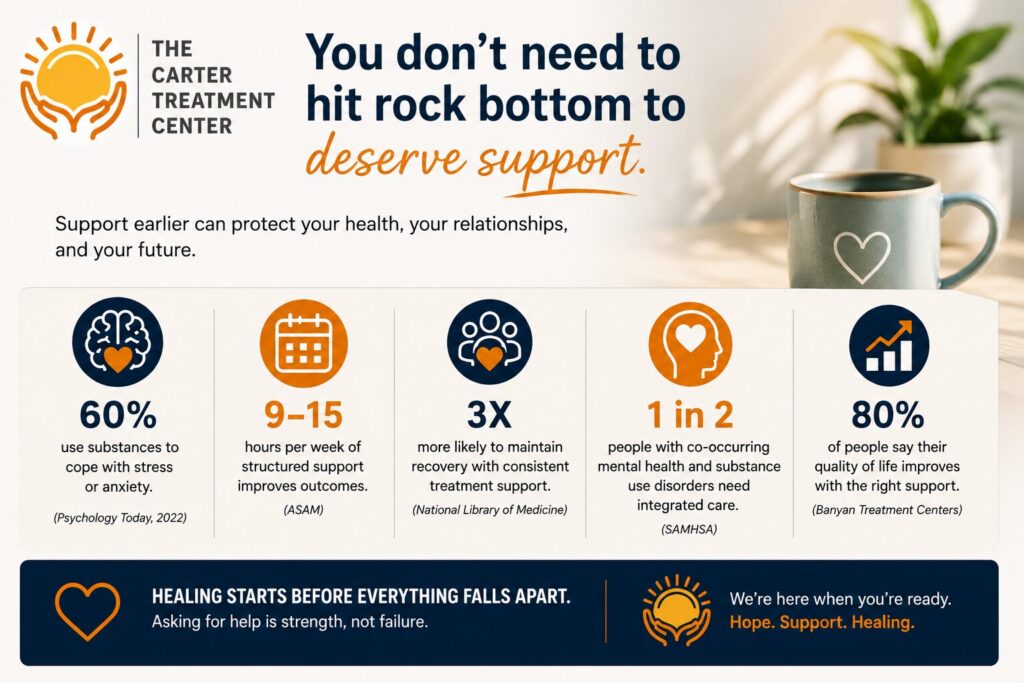
If that’s where you are, you’re not alone. And you don’t have to hit a breaking point to deserve support. Programs like structured daytime care can offer a way to pause, reset, and reconnect with yourself without completely stepping away from your life.
Notice the Difference Between Coping and Recovering
Many sober curious people are incredibly hard on themselves.
They think:
“I should be able to control this.”
“Other people have it worse.”
“If I’m still functioning, maybe I’m overreacting.”
But functioning and feeling okay are not the same thing.
A lot of people use alcohol or substances because they work temporarily. They soften anxiety. They slow racing thoughts. They make loneliness feel quieter for a few hours.
The problem is that coping tools can quietly become emotional debt. What helps you escape stress tonight may deepen exhaustion tomorrow.
That’s especially true when mental health struggles are already present underneath the surface. Some people searching phrases like therapy not working depression aren’t looking for a magic fix. They’re trying to understand why they still feel emotionally stuck despite trying to help themselves.
Sometimes weekly therapy simply isn’t enough support for what you’re carrying right now.
That doesn’t mean you’ve failed. It means you may need a different level of care.
Stop Waiting for a “Good Enough” Reason to Take a Break
One of the biggest misconceptions about treatment is that you have to be in complete crisis before you qualify for help.
You don’t.
You can want a healthier relationship with alcohol without identifying as an alcoholic.
You can feel emotionally burned out without having a dramatic collapse.
You can seek support simply because you’re tired of surviving this way.
That matters.
Because many people delay getting help until their relationships, health, or emotional stability deteriorate far more than they needed to.
Sometimes the strongest decision is choosing support early instead of waiting until things become unbearable.
A break from substances can create space to ask questions you may have avoided for a long time:
- What emotions am I trying to escape?
- When did drinking stop feeling fun and start feeling necessary?
- Have I actually felt emotionally present lately?
- What would life feel like without constantly negotiating with myself?
Those questions can feel scary at first. But they can also become the beginning of something honest.
Choose Support That Doesn’t Pull You Away From Your Entire Life
Fear keeps many people from reaching out.
Fear of being judged.
Fear of losing control.
Fear that treatment means disappearing from work, family, or responsibilities.
Structured daytime care exists partly because healing is not one-size-fits-all.
For people who need more support than weekly therapy but don’t necessarily need round-the-clock care, this kind of program can offer meaningful structure while still allowing you to return home in the evenings.
That middle ground often feels more approachable for sober curious individuals who are still trying to understand their relationship with substances.
Support may include:
- Individual therapy
- Group counseling
- Mental health support
- Psychiatric care if appropriate
- Daily accountability
- Skill-building for stress, anxiety, and emotional regulation
It’s not about punishment or losing independence.
It’s about creating enough stability for healing to actually happen.
Give Yourself Time to Hear Your Own Thoughts Again
One thing many people don’t realize until they take a break is how loud their inner world has become.
The constant mental negotiation can be exhausting:
“Should I drink tonight?”
“Am I making this a bigger deal than it is?”
“Why can’t I just stop at one?”
“Why do I still feel depressed even though I’m trying?”
Substances can temporarily mute those thoughts. But they rarely resolve them.
A structured treatment environment creates distance between you and the constant emotional noise. That distance matters more than people realize.
Healing often starts quietly.
You sleep more deeply for the first time in months.
You notice your anxiety isn’t constantly peaking.
You laugh during a group conversation and realize it felt genuine.
You wake up without dread sitting on your chest.
These moments may seem small from the outside. But internally, they can feel like oxygen returning to a room that’s been closed off for years.
Let Healing Be Messy Instead of Perfect
A lot of people avoid support because they think they need to be completely ready before they start.
You don’t.
You can feel uncertain and still ask questions.
You can feel skeptical and still deserve care.
You can miss drinking sometimes and still want a healthier life.
Recovery conversations are often framed too rigidly. Real healing usually looks much more human than that.
Some days you may feel hopeful. Other days you may wonder whether changing your habits is even worth it.
That doesn’t mean the process isn’t working.
It means you’re being honest.
And honesty is often the first thing substances slowly take away from us.
Build New Routines That Support Your Nervous System
Many people trying to cut back continue living inside routines that keep them emotionally overwhelmed.
Wake up anxious.
Push through work exhausted.
Numb out at night.
Repeat.
Over time, your nervous system begins to expect survival mode as the default setting.
Structured support interrupts that cycle.
Instead of constantly reacting to stress, you begin practicing healthier rhythms:
- Eating consistently
- Sleeping more regularly
- Processing emotions instead of avoiding them
- Learning coping tools that work outside a therapist’s office
- Building connection with people who understand what emotional exhaustion feels like
Recovery is rarely one giant breakthrough moment.
It’s usually smaller moments repeated consistently until your life starts feeling steadier.
Like learning how to breathe normally again after holding tension for years.
Stay Open to the Possibility That Life Could Feel Lighter
Many sober curious people fear what they might lose by stepping away from substances.
Will I still be social?
Will I still feel creative?
Will I still feel like myself?
Those fears are deeply human.
Substances often become tied to identity, comfort, celebration, confidence, or escape. Letting go of them can feel less like removing a habit and more like risking part of yourself.
But many people discover something unexpected on the other side of that fear.
They don’t disappear.
They reconnect.
They feel emotions more clearly.
They begin trusting themselves again.
Relationships become more honest.
Mornings feel less heavy.
Life starts feeling less performative and more real.
Not perfect. Just more present.
And sometimes presence is the thing people have been missing all along.
FAQ About Taking a Break From Alcohol or Substances
Do I have to identify as an addict to seek treatment?
No. Many people seek support because they want a healthier relationship with substances or because they feel emotionally exhausted. You do not need to adopt a label to deserve care.
What if I’m still functioning in daily life?
A lot of people seeking support are still working, parenting, or maintaining responsibilities. Functioning externally does not mean you feel okay internally.
Can structured daytime care help with mental health too?
Yes. Many people struggle with both emotional health concerns and substance use at the same time. Support can address anxiety, depression, stress, burnout, and substance use together.
What if therapy alone hasn’t been enough?
Sometimes people need more support than a weekly session can provide. A more structured environment may help create consistency, accountability, and emotional stabilization.
Will I have to stay overnight?
Structured daytime care allows people to participate in treatment during the day while returning home at night. This can feel more manageable for people who still need connection to daily life responsibilities.
What if I’m nervous about starting?
That’s normal. Most people feel uncertain before reaching out for help. You do not need to feel completely ready to start asking questions or exploring options.
If you’re looking for compassionate help in metro Atlanta, you don’t have to figure this out alone.
Call (404) 689-9980 or visit our partial hospitalization program services page to learn more.