


Bipolar disorder is often described as a condition that causes periods of depression and mania or hypomania. While that description is accurate, it does not fully capture how unpredictable the illness can become for some people.
Instead of experiencing mood episodes separated by months or years of stability, some individuals notice their symptoms shifting much more frequently. They may feel deeply depressed for weeks, begin recovering, then suddenly experience increased energy, racing thoughts, impulsive behavior, or reduced need for sleep before returning to another depressive episode. This pattern can feel exhausting, confusing, and difficult to manage.
This pattern is known as rapid cycling bipolar.
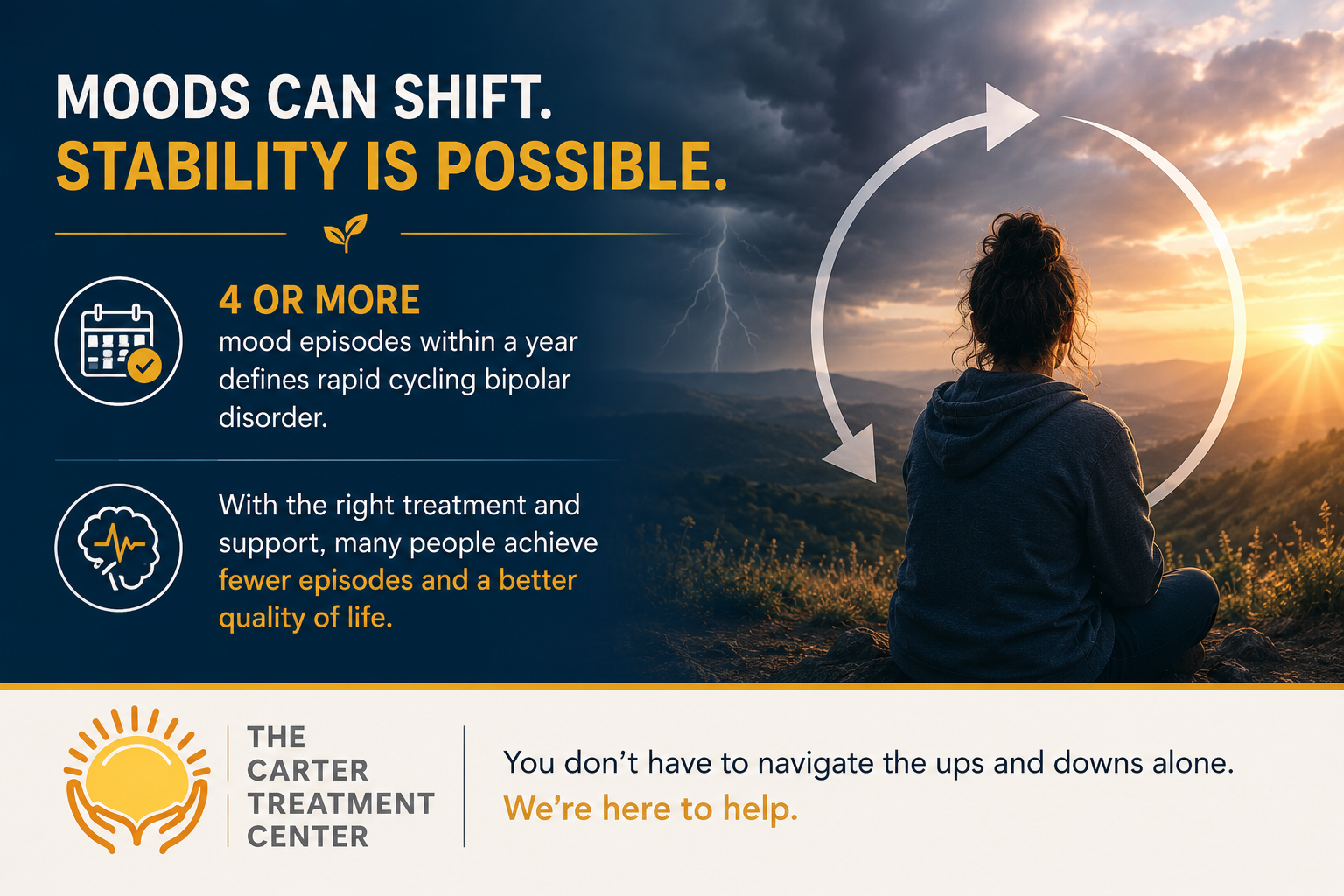
Rapid cycling is not a separate type of bipolar disorder. Rather, it is a course specifier used when someone with bipolar disorder experiences four or more distinct mood episodes within a 12-month period. Because mood changes occur more frequently, rapid cycling often requires careful medication management, lifestyle adjustments, and ongoing mental health treatment.
If you or someone you love is experiencing frequent mood shifts, understanding rapid cycling is an important first step. At The Carter Treatment Center, our bipolar disorder treatment programs help individuals throughout North Atlanta—including Alpharetta, Cumming, and Jefferson—receive individualized outpatient care designed to stabilize symptoms and improve long-term quality of life.
What Rapid Cycling Bipolar Disorder Is
Rapid cycling is a clinical pattern that can occur in both Bipolar I Disorder and Bipolar II Disorder.
According to diagnostic guidelines, rapid cycling means a person experiences:
- Four or more mood episodes within one year
- Episodes of depression
- Episodes of mania
- Episodes of hypomania
- Mixed episodes (when symptoms of depression and mania occur together)
Each episode must meet specific clinical criteria and generally be separated by either a period of remission or a switch into the opposite mood state.
Rapid cycling does not mean moods change every hour or every day. Although some people experience emotional fluctuations throughout the day, rapid cycling refers to distinct mood episodes that occur more frequently than is typical for bipolar disorder.
For many individuals, these repeated episodes significantly interfere with work, school, relationships, finances, and physical health.
What Rapid Cycling Feels Like
Living with rapid cycling bipolar can feel like never having enough time to regain emotional balance before another mood episode begins.
Many people describe feeling as though life is constantly changing underneath them.
During depressive episodes, they may experience:
- Persistent sadness
- Loss of motivation
- Fatigue
- Difficulty concentrating
- Feelings of hopelessness
- Sleep changes
- Withdrawal from loved ones
When mania or hypomania develops, symptoms may include:
- Increased energy
- Needing very little sleep
- Racing thoughts
- Talking much faster than usual
- Elevated confidence
- Increased goal-directed activity
- Impulsive spending
- Risk-taking behaviors
- Irritability
Some individuals also experience mixed episodes, where symptoms overlap.
Someone may feel:
- Extremely depressed
- Restless
- Unable to sleep
- Agitated
- Emotionally overwhelmed
- Full of racing thoughts while also feeling hopeless
Mixed episodes often feel particularly distressing because energy increases while emotional suffering remains intense.
Because rapid cycling brings repeated mood changes, people frequently begin questioning themselves.
They may wonder:
- “Why can’t I stay stable?”
- “Why do I keep feeling better only to crash again?”
- “Is this normal bipolar disorder?”
These experiences can lead to frustration, shame, and hopelessness, especially when symptoms disrupt careers, relationships, or family life.
What Triggers or Worsens Rapid Cycling
Researchers continue studying why rapid cycling develops in some individuals but not others.
Several factors appear to increase the likelihood of frequent mood episodes or make them worse.
Antidepressants Without a Mood Stabilizer
One of the most important clinical considerations involves antidepressant medications.
For some people with bipolar disorder, antidepressants—particularly when prescribed without an effective mood stabilizer—may contribute to switching into mania, hypomania, or more frequent mood episodes.
This does not mean antidepressants are always inappropriate.
Many people benefit from them when carefully monitored by an experienced psychiatric provider.
However, medication adjustments should always be made with professional guidance. Individuals should never stop taking prescribed medications on their own, as doing so can lead to withdrawal symptoms or worsening mood instability.
Sleep Disruption
Sleep is one of the strongest regulators of mood.
Several nights of poor sleep may trigger manic symptoms in susceptible individuals.
Common sleep-related triggers include:
- Shift work
- Staying awake late
- Traveling across time zones
- Insomnia
- Parenting newborns
- High academic or work demands
Protecting regular sleep schedules is often a major part of long-term bipolar management.
Substance Use
Alcohol and recreational drugs can make bipolar symptoms significantly harder to control.
Substance use may:
- Increase mood instability
- Disrupt medication effectiveness
- Interfere with sleep
- Increase impulsive behavior
- Trigger depressive episodes
- Increase suicide risk
Even substances that initially seem calming can worsen long-term mood regulation.
High Levels of Stress
Major life events can sometimes trigger new episodes.
Examples include:
- Divorce
- Loss of a loved one
- Financial problems
- Job loss
- Relationship conflict
- Serious illness
Chronic stress may also make recovery from an episode more difficult.
Medication Changes
Stopping medications suddenly or taking them inconsistently can increase the likelihood of relapse.
Because bipolar disorder often requires long-term treatment, maintaining regular follow-up with psychiatric providers is essential.
Medical Conditions
Certain medical conditions, including thyroid disorders, may contribute to mood instability.
Healthcare providers often evaluate physical health alongside psychiatric symptoms to identify contributing factors.
Why Rapid Cycling Is Harder to Treat Than Standard Bipolar
Rapid cycling presents unique treatment challenges.
Frequent mood episodes mean there is less time for the brain to stabilize between episodes.
This may lead to:
- More depressive episodes
- Greater functional impairment
- Higher relapse rates
- Increased hospitalization risk
- Greater difficulty finding the most effective medication combination
Treatment often requires more frequent follow-up appointments and closer monitoring than bipolar disorder without rapid cycling.
Finding the right medication regimen can also take time because providers must balance symptom control while minimizing side effects and avoiding treatments that could worsen mood instability.
Fortunately, many people achieve meaningful improvement with individualized care.
How Rapid Cycling Bipolar Is Managed at Carter
Successful treatment typically combines several evidence-based approaches rather than relying on medication alone.
At The Carter Treatment Center, outpatient mental health care focuses on helping individuals develop greater mood stability while supporting everyday functioning.
Treatment plans may include:
Comprehensive Psychiatric Evaluation
Accurate diagnosis is the foundation of effective care.
Clinicians evaluate:
- Previous mood episodes
- Medication history
- Sleep patterns
- Family history
- Medical conditions
- Substance use
- Current symptoms
Understanding these factors helps guide personalized treatment planning.
Medication Management
Psychiatric providers carefully monitor medications that support mood stability.
Depending on the individual’s needs, treatment may involve:
- Mood stabilizers
- Certain atypical antipsychotic medications
- Careful review of antidepressant use when appropriate
Medication adjustments are made gradually and monitored closely to improve symptom control while reducing the risk of future episodes.
Individual Therapy
Therapy helps individuals recognize:
- Early warning signs
- Mood triggers
- Stress patterns
- Emotional coping skills
- Healthy routines
Cognitive Behavioral Therapy (CBT), psychoeducation, and other evidence-based therapies can improve insight and help reduce relapse risk.
Sleep and Routine Stabilization
Many treatment plans include improving daily structure through:
- Consistent bedtime routines
- Regular wake times
- Exercise
- Balanced nutrition
- Stress management
- Healthy daily scheduling
Even small improvements in routine can support long-term mood stability.
Family Education
Loved ones often struggle to understand why moods change so dramatically.
Education helps families:
- Recognize warning signs
- Respond more effectively during episodes
- Reduce conflict
- Encourage treatment adherence
- Build stronger support systems
Family involvement can significantly improve long-term outcomes.
When to Seek Professional Help
Mood changes are a normal part of life.
Rapid cycling bipolar disorder is different.
If mood episodes are becoming more frequent, more severe, or interfering with daily functioning, professional evaluation is important.
You should seek help if you notice:
- Multiple depressive or manic episodes within a year
- Reduced need for sleep alongside increased energy
- Risk-taking behavior
- Severe depression
- Frequent medication concerns
- Substance use alongside bipolar symptoms
- Difficulty maintaining work or relationships because of mood changes
Earlier treatment often leads to better long-term symptom management.
Final Thoughts
Rapid cycling bipolar disorder can feel overwhelming because mood episodes occur more frequently than many people expect. The constant shifts between depression, mania, or hypomania may affect nearly every area of life, making work, relationships, and emotional stability increasingly difficult.
The encouraging news is that effective treatment is available. With a comprehensive evaluation, carefully managed medications, evidence-based therapy, healthy sleep routines, and ongoing support, many people experience fewer mood episodes and improved quality of life over time.
At The Carter Treatment Center, we provide individualized outpatient mental health care for adults throughout Alpharetta, Cumming, Jefferson, and the greater North Atlanta area. If you or someone you love is struggling with frequent bipolar mood episodes, reaching out for professional support can be the first step toward greater stability and lasting recovery.
Frequently Asked Questions
What is rapid cycling in bipolar disorder?
Rapid cycling is a pattern of bipolar disorder in which a person experiences four or more distinct mood episodes within a 12-month period. These episodes may include depression, mania, hypomania, or mixed episodes.
What causes rapid cycling?
Rapid cycling does not have one single cause. Factors associated with it include genetics, sleep disruption, significant life stress, substance use, certain medical conditions, inconsistent medication use, and, in some individuals, antidepressants that are not paired with appropriate mood-stabilizing treatment. A mental health professional can help determine what factors may be contributing in each individual case.
Can rapid cycling bipolar be treated?
Yes. Although rapid cycling can be more challenging to manage than other patterns of bipolar disorder, many people improve with a personalized treatment plan that may include medication management, psychotherapy, healthy sleep habits, stress reduction, and regular follow-up with experienced mental health providers. Early intervention often leads to better long-term outcomes.