


The first months after recovery support can feel intense.
You’re rebuilding routines. Paying attention to triggers. Having conversations that are honest in ways your life may not have been before.
Then something happens that almost no one warns you about.
Life settles down.
And sometimes that quiet can feel confusing.
If you once went through a structured daytime recovery program and now months or years later find yourself wondering why things feel a little flat, you’re not alone.
A surprising number of long-term alumni eventually reach this moment.
The moment when things are stable — but you’re not quite sure what to do with the quiet.
The Intensity of Early Recovery
Early recovery often feels like living in high definition.
Everything is sharper.
Your emotions feel stronger. Your awareness is higher. The work of recovery asks something from you almost every day.
There are groups, therapy sessions, check-ins, accountability conversations.
You’re actively rebuilding parts of your life that may have been unstable for a long time.
That stage requires enormous energy.
And because it’s so intense, it can also feel meaningful. Every day feels like progress. Every insight feels important.
You’re fighting for your life.
The Moment When Life Slows Down
Eventually, the structure eases.
The daily treatment schedule ends. The weekly appointments become less frequent. The urgent feeling that defined early recovery begins to fade.
At first, this is often a relief.
You can breathe again.
But after a while, something else appears.
Quiet.
No crisis.
No constant emotional breakthroughs.
Just normal life unfolding day after day.
For some people, that quiet feels peaceful.
For others, it feels strangely unsettling.
Why Stability Can Feel Strange
Many people assume that long-term recovery will feel exciting.
They imagine waking up every day grateful, energized, and inspired by the fact that they’ve rebuilt their life.
But real life rarely works that way.
Once the crisis phase ends, recovery shifts into something much quieter.
Maintenance.
Maintenance doesn’t always feel dramatic.
It looks like:
Going to work.
Cooking dinner.
Paying bills.
Keeping commitments.
Those things may seem ordinary.
But if your life once revolved around chaos, ordinary can feel unfamiliar at first.
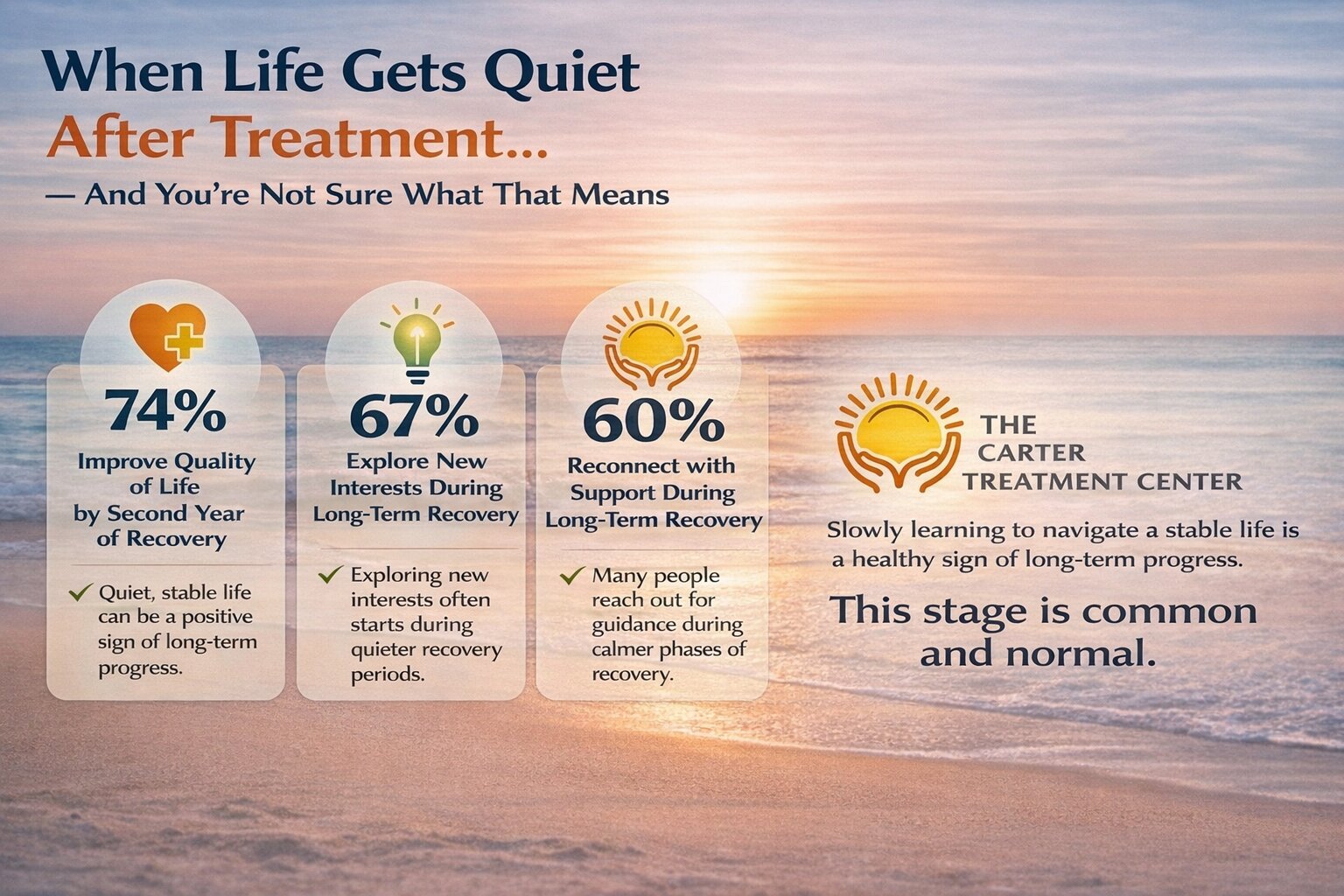
The Question Many Alumni Eventually Ask
At some point, many long-term alumni experience a quiet thought:
Is this all there is?
That thought can feel scary.
You may worry that something is wrong with you.
Maybe you expected recovery to feel more fulfilling.
Maybe you imagined a dramatic sense of purpose appearing automatically.
Instead, you’re simply living.
And living can feel slower than the intense work of recovery.
The Difference Between Recovery and Meaning
Early recovery is about survival.
It’s about stabilizing your life, protecting your health, and learning how to navigate difficult emotions without substances.
Long-term recovery becomes something different.
It becomes about meaning.
Meaning doesn’t always appear immediately.
It often grows slowly as people start exploring new interests, relationships, and goals that weren’t possible during active addiction.
But finding meaning takes time.
And the quiet phase of recovery is often where that search begins.
When Stability Starts to Feel Like Stagnation
Some alumni describe a strange emotional plateau.
They’re stable.
They’re no longer using.
But they don’t feel deeply fulfilled either.
This can lead to uncomfortable thoughts:
Maybe something is missing.
Maybe recovery flattened my life.
Maybe I’m just going through the motions.
These thoughts are more common than people realize.
They don’t mean recovery failed.
Often, they simply mean the next chapter of personal growth is beginning.
The Hidden Strength of a Quiet Life
One of the hardest truths about recovery is also one of the most powerful.
Stability often looks ordinary.
Paying bills on time.
Showing up for people consistently.
Keeping promises to yourself.
These things may not feel dramatic.
But they represent something incredibly meaningful.
They represent a life that no longer revolves around chaos.
Sometimes the quiet life you’ve built isn’t boring.
It’s peaceful.
And peace can take time to recognize.
Reconnecting With Purpose
If recovery feels quiet right now, it may simply mean you’re ready for the next stage.
This stage often involves asking new questions.
What kind of relationships do I want to build?
What interests have I ignored for years?
What kind of life do I want to create moving forward?
Those questions don’t have immediate answers.
But exploring them slowly can lead to something deeper than excitement.
They can lead to purpose.
And purpose is what often transforms stability into fulfillment.
When Support Still Matters
Another thing many alumni discover is that recovery doesn’t have a finish line.
Even years later, connection and support can still be important.
Sometimes that support looks like therapy.
Sometimes it looks like peer groups or mentorship.
Sometimes it simply means reconnecting with professionals who understand the long-term journey of recovery.
Continuing to talk about these experiences can help people navigate the quieter phases of recovery without feeling alone.
Frequently Asked Questions
Is it normal to feel disconnected after treatment?
Yes. Many people experience a period where life feels quieter or less intense after treatment ends. This stage is common and often part of long-term adjustment.
Does feeling bored in recovery mean something is wrong?
Not necessarily. Stability can feel unfamiliar after periods of chaos. Boredom sometimes reflects the transition into a more balanced life.
Why does early recovery feel more meaningful than later recovery?
Early recovery often involves dramatic changes and emotional breakthroughs. Later stages tend to focus more on maintaining stability and building long-term purpose.
How can someone find meaning after treatment?
Many people explore new interests, relationships, career goals, or personal passions. Purpose often develops gradually rather than appearing immediately.
Is it common for long-term alumni to feel stuck?
Yes. Periods of emotional plateau are common during long-term recovery. They often signal the beginning of a new stage of personal growth.
Should someone seek support again if they feel disconnected?
Reaching out for guidance can be helpful at any stage of recovery. Talking with professionals or peer communities can provide perspective and encouragement.
Does long-term recovery always feel peaceful?
Recovery includes ups and downs just like any other life experience. Moments of peace may coexist with periods of uncertainty or emotional growth.
Can someone return to treatment support if they feel stuck again?
Yes. Many individuals reconnect with structured recovery support if they need additional guidance at different stages of their journey.
If life feels quieter than expected after recovery, that doesn’t mean something is wrong.
For many people, it means they’ve reached the stage where stability is finally possible.
And sometimes the next step is simply exploring what kind of life you want to build within that stability.
For individuals seeking continued care in metro atlanta, supportive recovery resources remain available for every stage of the journey.
Call 470-284-1834 or visit our structured daytime recovery options to learn more about our partial hospitalization program services.