


Sometimes the moment happens slowly.
You notice small things changing. Your young adult stops returning calls. Their mood becomes unpredictable. Responsibilities start slipping. They seem overwhelmed by things that once felt manageable.
Other times, it happens suddenly.
A frightening phone call. A crisis at school. A moment when you realize your child is struggling in a way that feels bigger than anything you’ve faced before.
Parents often describe the same feeling:
Something is very wrong, and I don’t know how to help.
If you’re in that moment, you’re not alone. Many families searching for answers eventually encounter options like a structured daytime care program. At first, the name alone can feel overwhelming.
But for many families, this level of support becomes a turning point when a young adult is struggling to regain stability.
The Moment Parents Realize the Situation Is Escalating
Young adulthood is already a time of transition.
College pressures. New independence. Identity struggles. Financial stress. Relationships that suddenly feel complicated.
Most young adults move through these challenges with time and support.
But sometimes parents begin noticing something deeper.
Their child stops attending classes.
They isolate from friends.
Substance use appears or increases.
Mood swings grow intense or frightening.
Parents often describe feeling like they’re watching someone they love drift further away.
They remember who their child used to be — confident, curious, engaged — and wonder where that person went.
That uncertainty can create intense fear.
Not just fear about the present moment, but fear about what might happen next.
Why Weekly Therapy May Not Be Enough During a Crisis
Many families begin with therapy.
This is often the right starting point. A weekly conversation with a therapist can help a young adult explore their emotions and begin addressing difficult experiences.
But when a young adult enters a full behavioral health crisis, one hour a week may not provide enough support.
Imagine someone struggling with overwhelming anxiety, depression, trauma, or substance use.
They leave therapy with helpful insights.
But by the next day, stress returns. Triggers appear. Old habits creep back in.
Parents watch their child struggle between sessions and begin to feel helpless.
They want to help. They want their child to stabilize. But they also want to avoid more extreme measures like inpatient hospitalization if possible.
That’s where more structured care can sometimes make a meaningful difference.
How Daily Support Helps Stabilize a Crisis
The goal of structured daytime treatment is stabilization.
When someone is in crisis, their emotional world can feel chaotic and unpredictable. Thoughts race. Reactions become intense. Small stressors feel overwhelming.
Daily therapeutic support creates consistency.
Instead of facing the week alone after one appointment, the young adult engages in treatment throughout the week.
That support may include:
- individual therapy sessions
- group discussions with peers facing similar challenges
- coping skill development
- stress management strategies
- psychiatric guidance when appropriate
These repeated touchpoints give young adults multiple opportunities to process difficult experiences and practice healthier responses.
Think of it like learning to steady yourself during a storm.
A single conversation may provide insight. But consistent guidance helps someone regain balance.
The Power of Peer Connection
Many young adults in crisis feel deeply isolated.
They believe no one else understands what they’re experiencing. They may feel ashamed of their struggles or worried they’re disappointing their families.
Structured treatment environments introduce them to others navigating similar challenges.
That shared experience can be transformative.
Instead of feeling alone, young adults hear stories that mirror their own fears and frustrations.
They discover they are not broken.
They are human.
And they are surrounded by people working toward the same goal: stability and healing.
Helping Young Adults Rebuild Emotional Skills
When someone is in crisis, their ability to regulate emotions often becomes compromised.
Feelings arrive quickly and intensely.
Anger.
Fear.
Hopelessness.
Panic.
Structured treatment focuses on rebuilding emotional skills that help individuals respond differently when stress appears.
Young adults learn how to:
- identify emotional triggers
- slow down impulsive reactions
- communicate their needs clearly
- tolerate uncomfortable emotions without escaping through substances or harmful behaviors
These skills may sound simple, but they often require practice and repetition to become reliable tools.
That practice is one of the reasons consistent support can be so powerful.
Why Family Involvement Matters
Parents often feel powerless during a crisis.
They want to help their child but worry about saying the wrong thing. Conversations can quickly turn into arguments, misunderstandings, or emotional shutdowns.
Structured treatment programs often include opportunities for family involvement.
This support helps parents:
- better understand what their child is experiencing
- communicate more effectively during emotional situations
- establish healthy boundaries
- rebuild trust that may have been damaged during the crisis
Families are not expected to solve everything on their own.
Healing works best when young adults and parents receive guidance together.
Signs a Young Adult May Need Additional Support
Parents sometimes wonder whether their child is experiencing normal stress or something more serious.
While every situation is unique, certain patterns can indicate a need for additional help.
These may include:
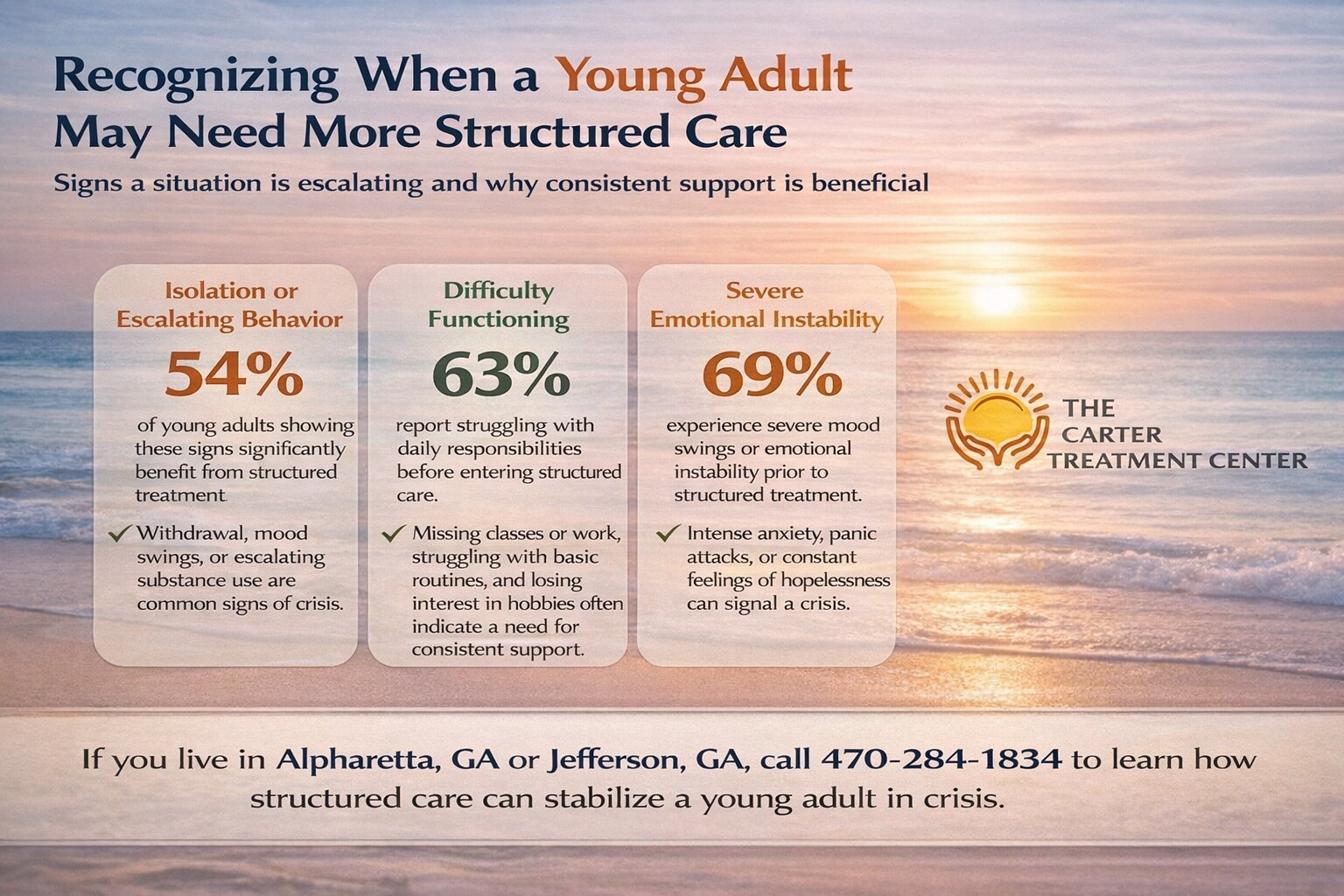
- severe mood swings or emotional instability
- withdrawal from school, work, or relationships
- escalating substance use
- difficulty managing daily responsibilities
- persistent feelings of hopelessness or despair
If these patterns continue or worsen, seeking professional support can help stabilize the situation before it becomes more dangerous.
What Stabilization Often Looks Like Over Time
Parents often hope that treatment will immediately solve the problem.
But recovery rarely happens overnight.
Instead, progress usually appears gradually.
A young adult begins attending sessions consistently.
Their sleep improves.
Conversations become calmer.
Decision-making becomes clearer.
Small improvements accumulate over time.
Families often describe this process as watching the fog slowly lift.
It doesn’t happen instantly.
But with consistent support, stability can begin to return.
Frequently Asked Questions
How can structured daytime care help stabilize a young adult in crisis?
Daily therapeutic support allows young adults to address emotional challenges consistently while learning practical coping strategies for managing stress and substance use.
Is this type of care appropriate for substance use challenges?
Yes. Many programs address both mental health concerns and substance use when those issues occur together.
Can young adults live at home during treatment?
In many cases, yes. Structured daytime care allows individuals to receive treatment during the day while returning home in the evening.
How long does stabilization treatment usually last?
The length of care varies depending on the individual’s needs, progress, and recovery goals.
What if my child doesn’t believe they need help?
Resistance can be common during a crisis. Treatment teams often help families explore ways to encourage participation while maintaining supportive relationships.
Can parents be involved in the recovery process?
Yes. Family involvement often plays an important role in helping young adults rebuild stability and improve communication within the household.
What if my child has already tried therapy before?
Many young adults enter structured treatment after trying other forms of support. A more consistent therapeutic environment can provide additional stabilization.
Is recovery possible after a severe mental health or substance crisis?
Yes. With the right support and consistent care, many young adults regain stability and build healthier coping skills over time.
If your young adult is struggling and you feel unsure about what to do next, compassionate support is available.
Families seeking help in metro atlanta can explore recovery options designed to stabilize young adults while helping parents navigate this difficult moment with guidance and care. If you’re navigating the quieter phase of recovery and want guidance, our team is here to help individuals and families in Alpharetta, GA and Jefferson, GA.
Call 470-284-1834 or visit our structured daytime care options to learn more about our partial hospitalization program services.