


I didn’t plan to relapse.
But I didn’t plan to reach out again, either.
After 90+ days sober, I thought I was past the worst of it. I’d started to feel real pride again, even confidence. And then—suddenly—I wasn’t sober anymore.
If you’ve been there, you already know: the shame after relapse can be suffocating. You don’t just feel like you messed up—you feel like you undid everything.
My first instinct wasn’t to get help again. It was to disappear.
But disappearing didn’t give me peace. Choosing a partial hospitalization program did.
This isn’t a PSA. It’s not an “everything happens for a reason” speech. It’s just a real moment from someone who relapsed, almost ran, and instead found something different—something that didn’t ask me to be brand new, just to be brave enough to come back.
When Shame Tells You to Vanish
The first few days after I used, I went silent. Ignored texts. Avoided meetings. Stopped showing up—even for myself.
Shame talks loud after relapse. It tells you no one will understand. That if you call your old counselor, they’ll be disappointed. That your friends in recovery will write you off.
And if you’ve been away from treatment a while, the shame can be even worse—because now you “should’ve known better,” right?
Here’s the truth I had to learn the hard way:
Relapse doesn’t make you a failure. Staying stuck in it because of shame? That’s the part that hurts most.
Why I Chose a Partial Hospitalization Program
Honestly? I didn’t want inpatient again.
I wasn’t spiraling so far that I needed detox. But I also wasn’t in a place where a once-a-week meeting could hold me up.
That in-between space felt terrifying—until someone at The Carter Treatment Center reminded me about PHP.
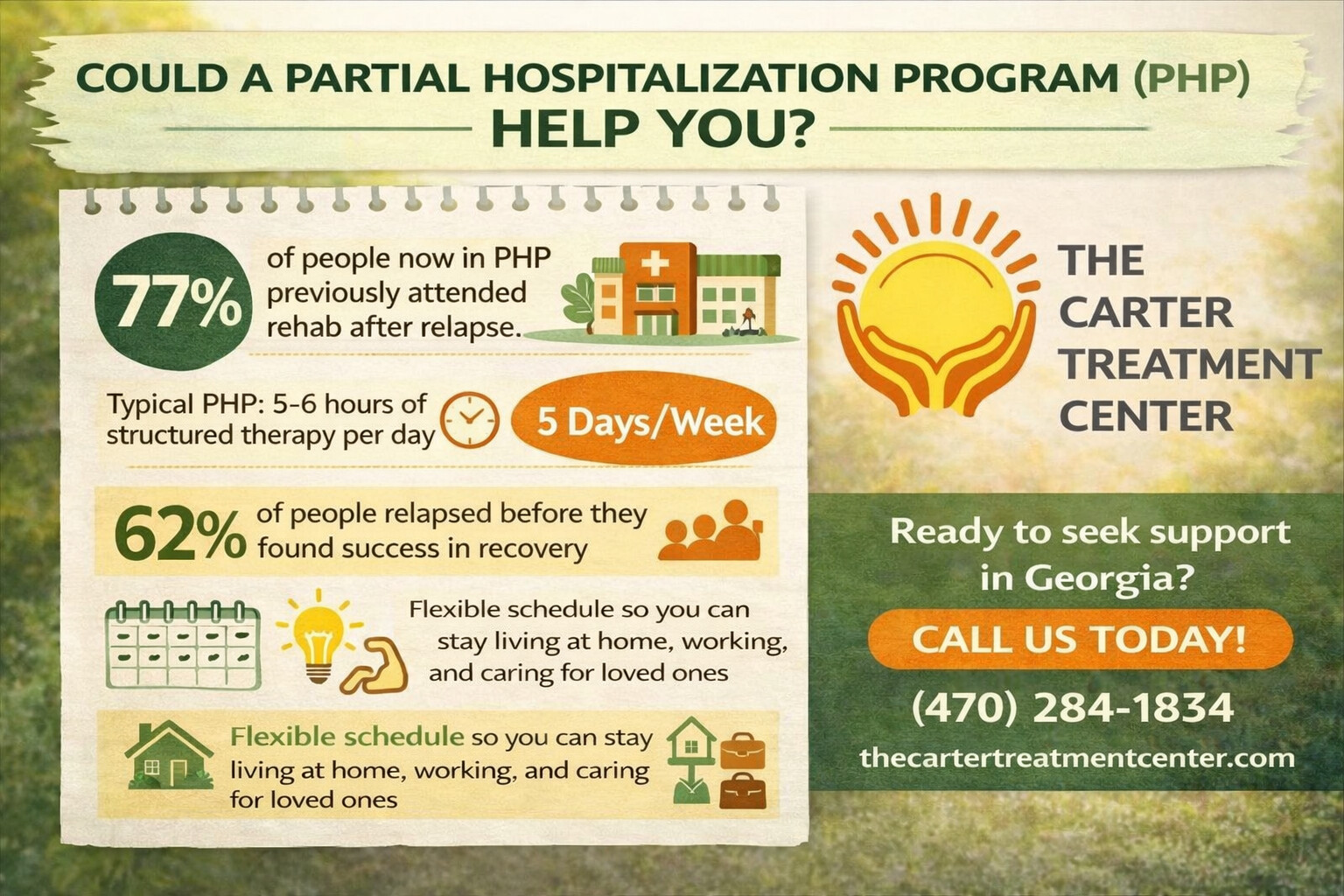
A partial hospitalization program offers the structure and clinical care of residential treatment without living onsite. It’s built for people who need more than outpatient support but still want to stay connected to their home life, job, or family.
It became the middle ground I didn’t know I needed.
What PHP Looked Like for Me (And Might for You)
When I showed up for my first PHP session, I half expected someone to question why I was there again.
Instead, I heard:
“We’re glad you came back.”
That was the moment I realized this wasn’t about restarting. It was about resuming—but with support, with structure, and without pretending I was okay when I wasn’t.
Here’s what a typical PHP day looked like for me at The Carter:
- Morning check-in and group therapy
- A mix of CBT, relapse prevention, and mindfulness work
- One-on-one sessions with a therapist I already trusted
- Support from peers—some new, some returning like me
- Wrap-up reflection and planning for the evening
That rhythm created something my brain and body desperately needed after relapse: a safe place to land.
The Power of Familiar Faces and No Judgment
Coming back felt scary. But I can’t stress this enough—I wasn’t treated like a dropout. I was treated like a person who still wanted healing.
The staff didn’t look at me like I failed. They saw someone who had already made progress once, and could do it again. That changed everything.
And seeing familiar peers—others who had also relapsed, returned, and rebuilt—quieted something inside me that had been screaming: “You don’t belong here anymore.”
I did. I do. You do too.
Recovery After Relapse Isn’t Starting Over
Relapse doesn’t erase the work you’ve done. It just points to where you need more support.
In PHP, I realized I still remembered my coping skills—I’d just stopped using them when life got loud. I still had insights from earlier therapy—I just needed space to apply them now, with new eyes.
What PHP offered me was a way to reconnect with those tools and people—not to begin again, but to begin again with experience.
Why I Didn’t Disappear
I’ll be honest—there were moments I still wanted to run. But the structure of PHP made disappearing harder in the best way.
When you show up every day, even when you don’t want to, something shifts. You start to believe in consistency again. In yourself.
It wasn’t magical. It was mundane—but powerful. Every therapy session, every group share, every time I said “I’m still here” out loud… those were the real moments of healing.
Who PHP Is Right For
If you’re like me—relapsed after some serious time sober—and you don’t need detox or inpatient, but also don’t feel steady in outpatient care alone, PHP might be exactly what you need.
You don’t have to be in total crisis to need help. You just have to be honest enough to say:
“What I was doing isn’t working anymore. I want something better.”
If you’re in or near Georgia, The Carter Treatment Center offers compassionate, evidence-based support in metro Atlanta, Jefferson, GA and their PHP program is built for people like us: not broken, not beginners. Just human.
💬 Real Talk from Others Like Us
“I thought they’d judge me for coming back. Instead, they welcomed me like I never left.”
– PHP Alumni, 2022
“PHP gave me structure after I lost mine. I stopped ghosting people. I started breathing again.”
– Returning Client, 2023
Frequently Asked Questions About PHP After Relapse
What is a partial hospitalization program?
A partial hospitalization program (PHP) is a structured, clinical level of care that offers daily therapy and medical support without requiring you to stay overnight. It’s ideal for people who need intensive help but want to live at home.
Is PHP just for first-time treatment seekers?
Not at all. PHP is often the best option for alumni who’ve relapsed or plateaued. It provides accountability and support without making you start from scratch.
Will people judge me for coming back?
No. At The Carter Treatment Center, relapse is treated with compassion, not judgment. Staff and peers understand that recovery is a process—not a straight line.
Can I still work or take care of my family during PHP?
Yes, many people attend PHP while balancing work or caregiving. The program typically runs during the day, allowing evenings at home.
How do I know if PHP is right for me?
If you’ve relapsed and feel emotionally unstable, isolated, or unsure what comes next—but don’t need inpatient detox—PHP might be the structured support you need. You can always call to talk through options.
You’re Not Starting Over—You’re Starting Again
Relapse didn’t undo your healing. It just reminded you that recovery needs maintenance.
You are not weak for needing more help. You are not broken for having used again. And you are not beyond belonging.
At The Carter Treatment Center, a partial hospitalization program isn’t a punishment or a demotion. It’s a life raft. A reset. A place to be seen, supported, and real.
📞 Ready to Reconnect?
Call (470) 284-1834 or visit to learn more about our partial hospitalization program services in Alpharetta, GA . We’re not here to shame you. We’re here to welcome you back.